


Applique Embroidery: Complete Guide, Types & Design Ideas

Applique embroidery is a creative embroidery technique that combines fabric and thread to build colorful, textured designs. Instead of filling an entire shape with thousands of embroidery stitches, a piece of fabric becomes part of the design itself. Embroidery stitches are then used to secure and decorate the fabric edges.
This makes applique especially useful for large letters, monograms, children's clothing, sweatshirts, tote bags, seasonal decorations, and many other personalized embroidery projects.
For machine embroiderers, applique can also reduce stitch count, introduce interesting fabric patterns, and create designs that would be difficult to achieve with thread alone.
In this guide, we'll explain what applique embroidery is, how it works, the different techniques and stitches used, the best fabrics to choose, common mistakes to avoid, and creative applique ideas you can try with your embroidery machine.
What Is Applique Embroidery?
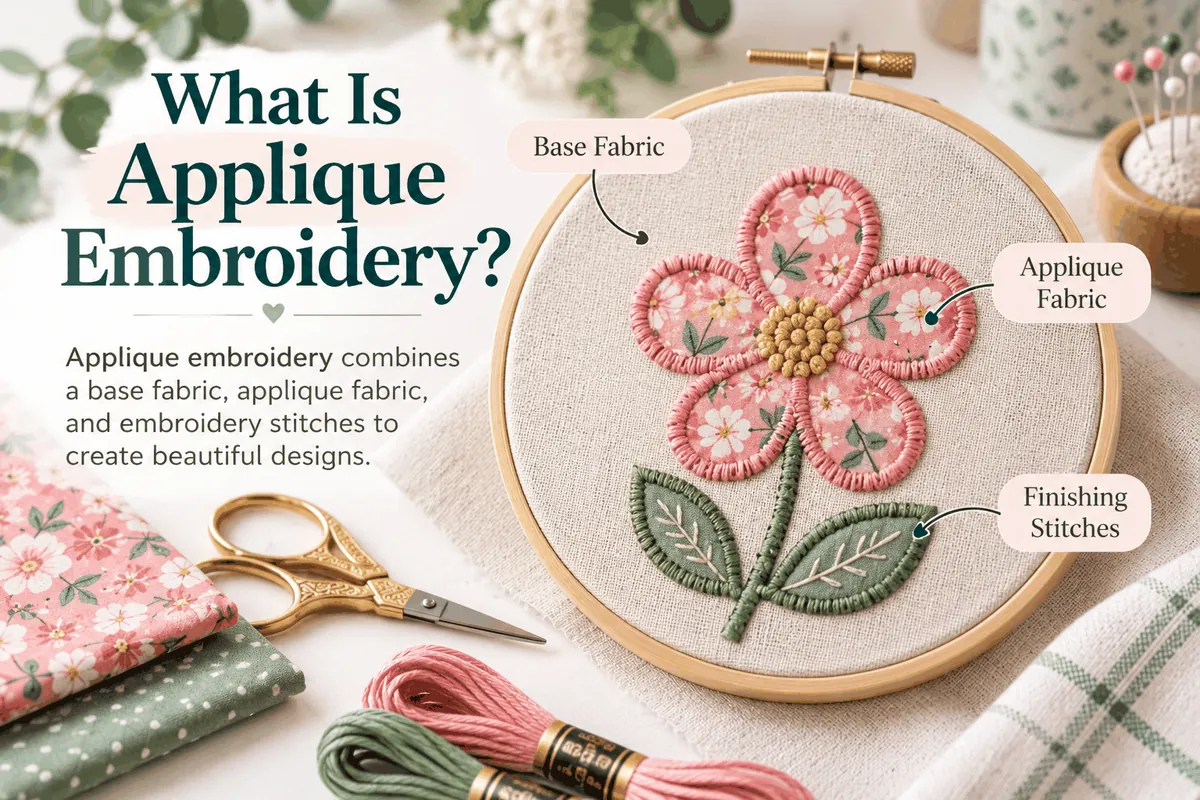
Applique embroidery is a decorative embroidery technique in which one or more pieces of fabric are placed on top of a base material and secured with embroidery stitches.
Rather than creating the entire design using thread, the applique fabric forms part of the finished artwork.
A typical machine applique design consists of several elements:
- A base fabric or garment
- A placement stitch
- A separate piece of applique fabric
- A tack-down stitch
- A finishing stitch around the fabric edge
The finishing edge is commonly created with satin stitches, zigzag stitches, or decorative stitches.
For example, imagine embroidering a large letter on a sweatshirt.
With traditional embroidery, the entire letter might be filled with dense thread stitches. With applique embroidery, patterned cotton or another fabric can form the center of the letter while embroidery stitches secure and finish its outer edge.
The result is a lighter, more dimensional design with a completely different visual texture.
How Does Applique Embroidery Work?
Machine applique typically follows five basic stages:
Placement stitch → Fabric placement → Tack-down stitch → Trimming → Finishing stitch
Understanding these stages makes it much easier to recognize how applique embroidery files are constructed.
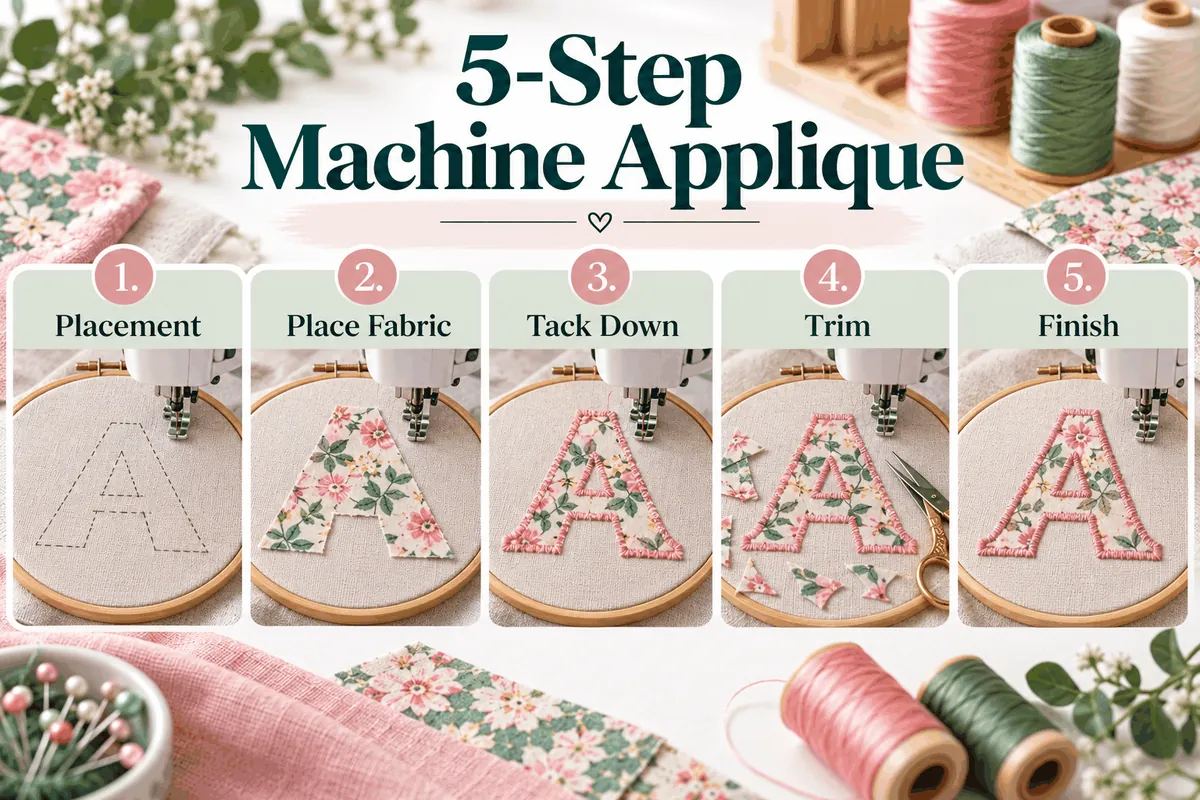
1. Placement Stitch
The embroidery machine first stitches an outline showing where the applique fabric should be positioned.
This outline is called the placement stitch.
It acts as a guide rather than a decorative element in the final design.
2. Place the Applique Fabric
The applique fabric is placed over the placement outline.
The fabric should cover the stitched area completely, with enough extra material around the edges to make trimming easier.
Depending on the project, embroiderers may use cotton, twill, felt, denim, vinyl, patterned fabric, or other suitable materials.
3. Tack-Down Stitch
The machine then stitches another outline over the applique fabric.
This is known as the tack-down stitch.
Its purpose is to hold the applique fabric firmly in position so it does not move during trimming or final embroidery.
4. Trim the Excess Fabric
After the tack-down stitch is complete, the hoop is usually removed from the machine without removing the fabric from the hoop.
Small applique scissors can then be used to trim closely around the tack-down line.
The closer the fabric is trimmed without cutting the stitches, the cleaner the finished applique edge will usually appear.
5. Finish the Edge
Finally, the embroidery machine stitches over the raw edge of the applique fabric.
Satin stitching is one of the most common finishes because it creates a smooth, polished border.
However, zigzag, blanket, bean, or decorative stitches may also be used depending on the style of the design.
If you want a detailed step-by-step tutorial covering machine setup, trimming, stabilizers, and stitching, read our guide to how to machine applique embroidery.
Applique Embroidery vs Regular Embroidery
The biggest difference between applique embroidery and traditional embroidery is the material used to create the main visual area of the design.
In traditional embroidery, thread creates most or all of the artwork.
In applique embroidery, fabric becomes part of the design.
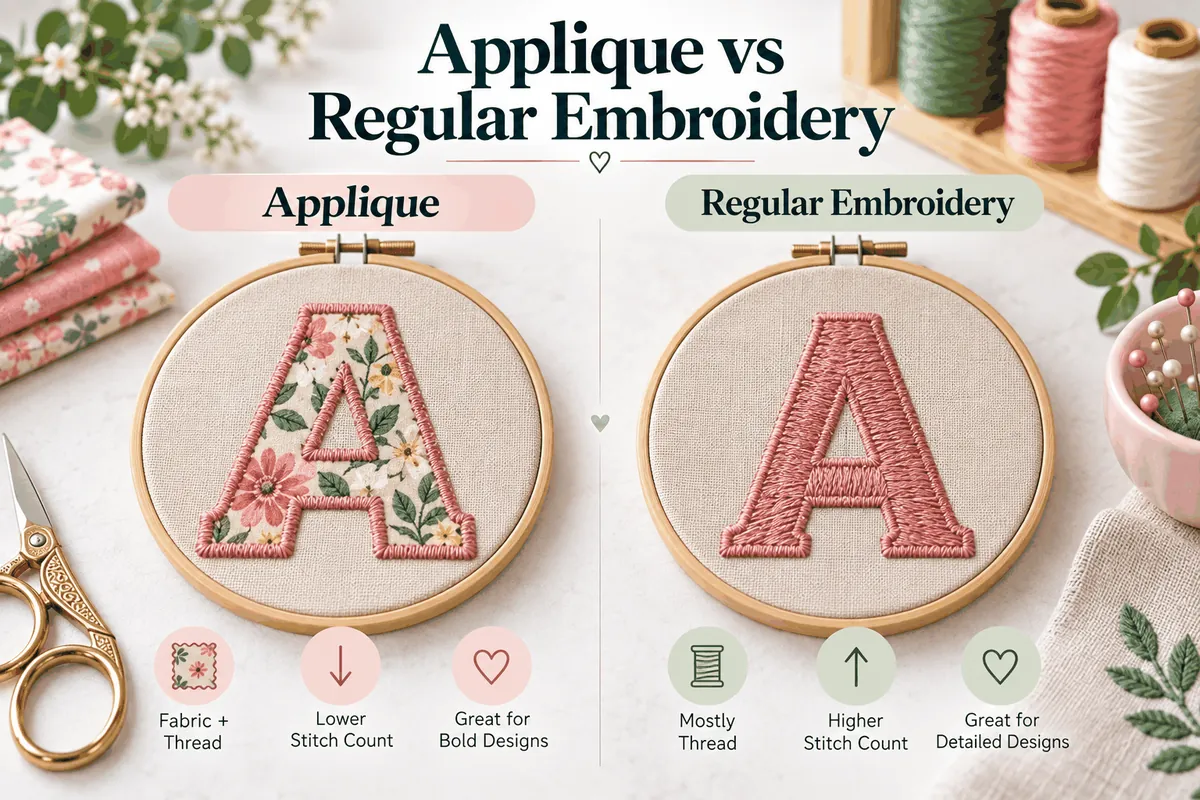
| Feature | Applique Embroidery | Regular Embroidery |
|---|---|---|
| Main design material | Fabric + thread | Primarily thread |
| Stitch count | Often lower | Often higher |
| Texture | Layered fabric texture | Thread texture |
| Large filled areas | Efficient | Can require many stitches |
| Patterns | Fabric prints can be used | Created through thread |
| Design effect | Bold and dimensional | Detailed and stitched |
| Popular uses | Letters, monograms, large shapes | Logos, illustrations, lettering |
Neither method is automatically better.
Traditional embroidery is excellent when fine detail, shading, or fully stitched artwork is important.
Applique is particularly effective when you want large shapes, contrasting materials, bold personalization, or decorative fabrics to become part of the design.
Many embroidery projects combine both techniques.
An applique letter, for example, might contain a fabric center surrounded by embroidered flowers, names, outlines, or decorative details.
Types of Applique Embroidery
There are several ways applique can be finished. Each technique produces a slightly different appearance.
Satin Stitch Applique
Satin stitch applique is one of the most common forms of machine embroidery applique.
A dense satin border covers the cut edge of the fabric, creating a smooth and polished finish.
It works especially well for:
- Monograms
- Large letters
- Children's clothing
- Sweatshirts
- Tote bags
- Seasonal designs
Because the edge is covered, small inconsistencies from trimming are often less noticeable.
Zigzag Applique
Zigzag applique uses an open zigzag stitch around the fabric edge instead of dense satin stitching.
It generally produces a lighter and more casual look.
Zigzag applique can be a good option when you want:
- Less dense stitching
- A handmade appearance
- Faster embroidery
- More visible fabric edges
Raw-Edge Applique
Raw-edge applique intentionally leaves part of the fabric edge exposed.
Instead of completely covering the cut edge with dense stitching, lighter stitches hold the fabric in place.
The slightly unfinished appearance can work well for rustic, vintage, or craft-inspired projects.
Blanket Stitch Applique
Blanket stitches create spaced perpendicular stitches around the applique edge.
This style is commonly associated with handmade applique and quilting.
Machine embroidery designs can recreate the same decorative effect.
Reverse Applique
Reverse applique works differently from traditional applique.
Rather than placing a decorative fabric on top of the base material, another fabric is positioned underneath it.
Part of the upper fabric is cut away so the fabric underneath becomes visible.
The result can create interesting layered or dimensional effects.
Multi-Layer Applique
Some machine embroidery designs use several applique fabrics within one design.
A character might contain separate fabrics for clothing, accessories, and other details.
Flowers, animals, vehicles, seasonal motifs, and children's designs often work well with multi-layer applique.
These projects can look impressive but usually require more fabric placement and trimming steps.
What Fabrics Are Best for Applique Embroidery?
The best applique fabric depends on your design, garment, and desired finish.
For beginners, stable fabrics that do not stretch excessively are usually the easiest to work with.
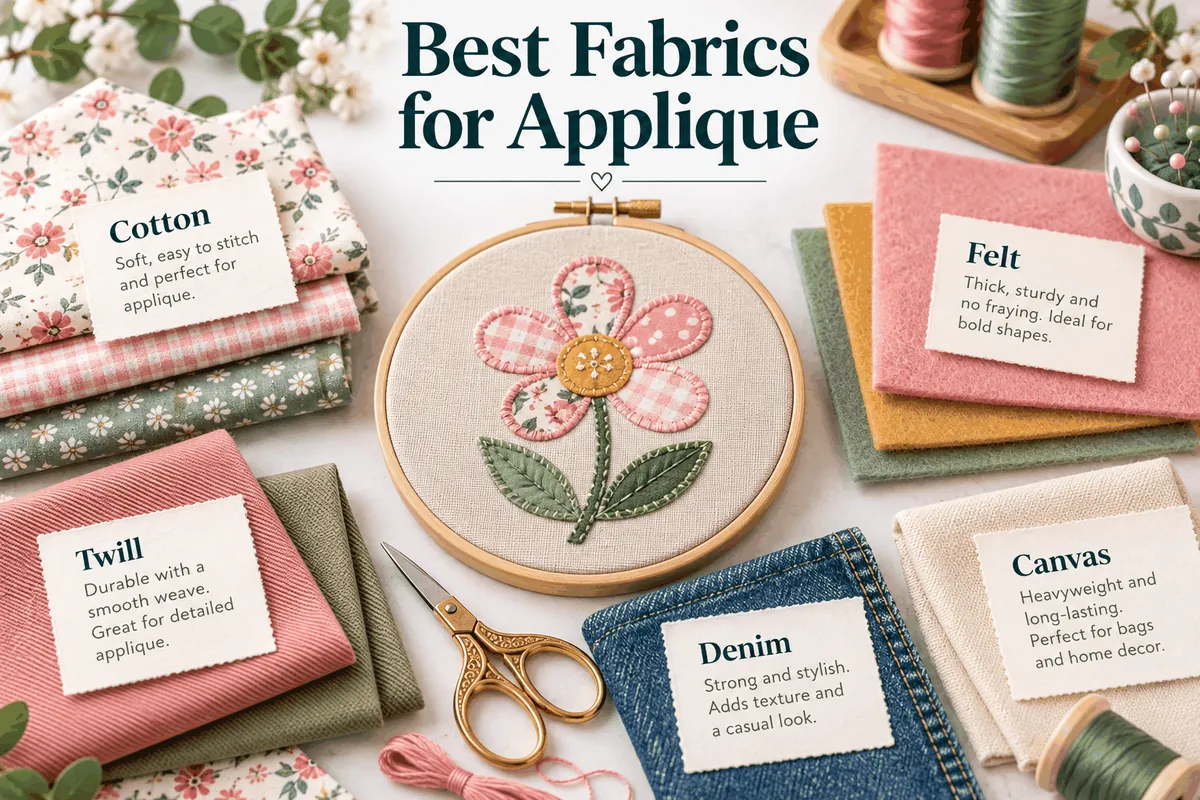
| Fabric | Good For | Difficulty |
|---|---|---|
| Cotton | Beginners, shirts, children's designs | Easy |
| Twill | Letters, uniforms, school designs | Easy |
| Felt | Shapes, patches, crafts | Easy |
| Denim | Jackets, bags, casual projects | Medium |
| Canvas | Bags and home decor | Medium |
| Faux leather | Accessories and bold designs | Medium |
| Glitter vinyl | Children's and decorative projects | Medium |
Cotton
Cotton is one of the easiest materials for applique embroidery.
It is widely available, easy to trim, and comes in thousands of colors and printed patterns.
Patterned cotton can also make a simple applique shape much more interesting without adding embroidery stitches.
Twill
Twill is commonly used for lettering, patches, team designs, and bold applique shapes.
Because it is relatively stable, it works well with machine embroidery.
Felt
Felt is another beginner-friendly choice because the edges do not fray as easily as many woven fabrics.
It works particularly well for children's projects, ornaments, patches, and decorative items.
Denim
Denim creates a heavier, textured effect and can work beautifully for bags, jackets, and casual garments.
Because denim is thicker, make sure your embroidery setup is appropriate for the combined material layers.
What Stitches Are Used in Applique Embroidery?
Several stitches may appear in a machine applique embroidery file, but each has a different purpose.
Placement Stitch
The placement stitch shows where the applique fabric should be positioned.
It is normally the first applique-specific stitching step.
Tack-Down Stitch
The tack-down stitch secures the applique fabric before trimming.
It needs to hold the material firmly enough that it does not shift during the remaining embroidery.
Satin Stitch
Satin stitch is commonly used as the final border.
Its dense stitches cover the fabric edge and create a smooth professional finish.
Zigzag Stitch
Zigzag stitching creates a lighter border than satin stitching.
Depending on the design, the fabric edge may remain partially visible.
Blanket Stitch
Blanket stitching creates a more decorative, handmade-inspired border.
The best stitch depends on the design style rather than one technique being universally better than another.
Why Use Applique Instead of Full-Fill Embroidery?
One of the biggest advantages of applique is that fabric can replace large areas that would otherwise require dense embroidery stitches.
This can provide several benefits.
Lower Stitch Counts
Large full-fill embroidery shapes may require thousands of stitches.
Applique replaces much of that thread with fabric.
Faster Stitching for Large Designs
Because fewer fill stitches may be necessary, some large applique designs can stitch more efficiently than equivalent full-fill embroidery designs.
Less Thread Usage
The fabric itself creates much of the color and visual area.
This can reduce the amount of embroidery thread required.
More Texture
Applique introduces another physical material into the design.
Cotton, denim, felt, glitter fabric, and other materials can all create different textures.
More Pattern Options
With applique, the pattern printed on your fabric becomes part of the embroidery.
For example, the exact same applique letter can look completely different when stitched using floral cotton, gingham, polka dots, metallic fabric, or solid colors.
Great for Large Letters and Monograms
Large applique letters are especially popular because fabric can fill the center while embroidery defines the shape.
This makes applique ideal for names, initials, school lettering, personalized sweatshirts, and monogram projects.
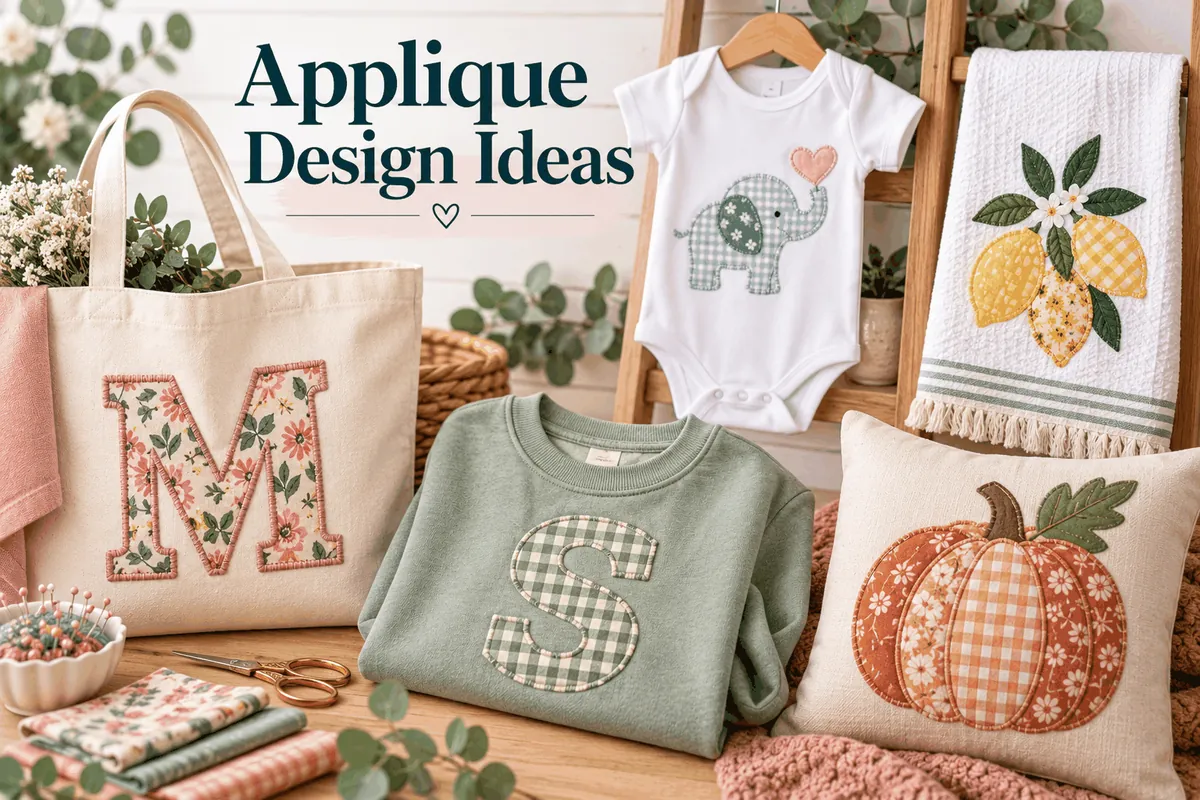
Popular Applique Embroidery Project Ideas
One of the best things about applique embroidery is its versatility.
The same technique can be used across clothing, gifts, accessories, home decor, and seasonal projects.
Personalized T-Shirts
Names, initials, numbers, animals, and seasonal designs work well on shirts.
Applique also allows fabric patterns to coordinate with the garment.
Sweatshirts
Large applique lettering has become especially popular for sweatshirts.
Initials, city names, school-inspired text, and monograms can all work well in larger hoop sizes.
Tote Bags
Tote bags offer a relatively large embroidery area, making them ideal for applique flowers, initials, names, and decorative shapes.
Children's Clothing
Animals, vehicles, dinosaurs, princess motifs, initials, and birthday designs are common applique ideas for children's garments.
Towels
Applique initials or monograms can turn ordinary towels into personalized gifts.
School and Team Designs
Large letters, numbers, mascots, and school-inspired designs are natural candidates for applique embroidery.
Seasonal Projects
Applique is also popular for holiday embroidery.
Ideas include:
- Christmas trees and ornaments
- Halloween ghosts and pumpkins
- Easter bunnies
- Valentine's Day hearts
- Fall leaves
- Spring flowers
Changing the applique fabric can allow the same general design style to work across different themes.
Applique Embroidery Fonts and Monograms
Applique embroidery is especially effective for fonts and monograms.
Instead of stitching the entire letter with thread, the body of the letter is created with fabric and the edge is finished with embroidery stitches.
This works particularly well for large lettering because it keeps the design visually bold without requiring extremely dense fill stitching.
Applique fonts can be used for:
- Names
- Initials
- Sweatshirts
- School shirts
- Tote bags
- Baby clothing
- Towels
- Personalized gifts
- Monogram projects
Fabric selection also allows one embroidery font to produce many different styles.
A floral cotton might create a soft, feminine look, while denim or plaid could completely change the character of the same letter.
You can explore more applique embroidery designs and fonts from Apex Embroidery Designs.
How to Choose an Applique Embroidery Design
Before purchasing or downloading an applique embroidery file, check a few important details.
Check Your Hoop Size
Make sure the finished design dimensions fit inside your embroidery machine's available hoop.
Common hoop sizes include:
- 4×4
- 5×7
- 6×10
However, machine capabilities vary considerably.
Always check the actual design dimensions rather than relying only on a general hoop-size label.
Check the Embroidery File Format
Different embroidery machines use different file formats.
Common formats include:
- PES
- DST
- JEF
- EXP
- HUS
- VIP
- VP3
- XXX
Make sure the design is available in a format compatible with your machine.
Look at the Number of Applique Pieces
Simple designs may require only one fabric placement.
More complex designs can contain several separate applique pieces.
If you're new to applique embroidery, starting with a single-piece design can make learning easier.
Look at the Finishing Stitch
Check whether the design uses satin, zigzag, blanket, or another edge treatment.
Each creates a different style.
Plan Your Fabric Before You Stitch
Fabric choice can dramatically change the appearance of applique embroidery.
Consider:
- Color contrast
- Print scale
- Fabric thickness
- Stretch
- Fraying
- Project style
For patterned applique fabric, remember that very large prints may disappear when used inside small applique shapes.
Common Applique Embroidery Mistakes
Even relatively simple applique designs can produce disappointing results if a few basic details are overlooked.
The Applique Fabric Moves
If the fabric shifts before the tack-down stitching is finished, the final border may not align properly.
Make sure the fabric lies flat and fully covers the placement line.
Fabric Extends Outside the Final Border
This commonly happens when excess fabric has not been trimmed closely enough.
Trim close to the tack-down stitching while being careful not to cut the embroidery stitches.
The Finished Fabric Puckers
Puckering may be related to stabilizer choice, hooping, tension, fabric movement, or excessive embroidery density.
The best solution depends on the garment and design.
The Satin Border Does Not Cover the Fabric Edge
Misalignment can be caused by poor trimming, fabric movement, registration issues, or how the embroidery design was digitized.
Accurate digitizing is particularly important because placement, tack-down, and finishing stitches need to align correctly.
The Applique Fabric Frays
Some fabrics fray more easily than others.
A dense satin border can help cover raw edges, but choosing a more stable applique fabric may also make the project easier.
For more help with the complete stitching process, see our detailed machine applique embroidery tutorial.
Applique Embroidery Ideas From Apex Embroidery Designs
Once you understand how applique works, there are almost endless ways to use the technique.
At Apex Embroidery Designs, applique can be incorporated into projects such as:
- Floral applique
- Animal applique
- Children's embroidery
- Seasonal embroidery
- Applique monograms
- Applique embroidery fonts
- Personalized gifts
- Large decorative lettering
The creative result depends not only on the embroidery file but also on the fabric you choose.
One applique design can produce dozens of different finished looks simply by changing the material, pattern, or color combination.
Browse the Applique Embroidery Designs collection to find machine embroidery files for your next project.
Applique Embroidery at Apex Embroidery Designs
A well-made applique design depends heavily on digitizing.
Placement stitches must show the correct fabric position, tack-down stitches need to secure the material properly, and finishing borders should align with the applique edge.
Apex Embroidery Designs creates machine embroidery designs and embroidery fonts with the finished stitching process in mind.
Whether you're creating personalized clothing, monograms, seasonal projects, or gifts, a properly digitized embroidery file can make the applique process much easier and help produce cleaner results.
Frequently Asked Questions About Applique Embroidery
What is applique embroidery?
Applique embroidery is a technique that uses pieces of fabric as part of an embroidered design. The fabric is usually positioned using a placement stitch, secured with a tack-down stitch, trimmed, and then finished around the edge with satin, zigzag, or decorative embroidery stitches.
Is applique the same as embroidery?
Not exactly. Traditional embroidery primarily uses thread to create the design, while applique combines fabric with embroidery stitches. Applique is therefore better described as a technique that can be used within embroidery.
Can you do applique with an embroidery machine?
Yes. Many machine embroidery files are specifically digitized for applique. The machine guides the process through placement, tack-down, and finishing stitch sequences while the embroiderer places and trims the applique fabric between steps.
What fabric is best for machine applique?
Cotton and twill are good choices for many applique projects, especially for beginners, because they are relatively stable and easy to trim. Felt is also easy to work with. The ideal fabric depends on the project, garment, design size, and finishing stitch.
What stitch is best for applique embroidery?
Satin stitch is one of the most popular finishing stitches because it creates a clean border that covers the cut fabric edge. Zigzag and blanket stitches are also commonly used when a lighter or more decorative appearance is preferred.
Do you need stabilizer for applique embroidery?
Most machine applique projects require stabilizer because the embroidery stitches still need proper support. The correct stabilizer depends on the base material, design density, garment type, and embroidery machine setup.
Is applique embroidery faster than regular embroidery?
It can be, particularly for large filled areas. Instead of filling the entire shape with dense thread stitches, applique uses fabric to create much of the visual area. However, total production time also includes placing and trimming the applique fabric.
What embroidery file formats are used for applique?
Applique designs use the same general machine embroidery file formats as other embroidery designs. Depending on the embroidery machine, compatible formats may include PES, DST, JEF, EXP, HUS, VIP, VP3, XXX, and others.
Start Your Next Applique Embroidery Project
Applique embroidery gives machine embroiderers a simple way to combine thread, fabric, pattern, and texture in one design.
The basic process is straightforward: stitch the placement line, add the applique fabric, secure it, trim the excess, and complete the decorative border.
From simple children's designs to oversized monograms and personalized sweatshirts, the possibilities expand dramatically once you begin experimenting with different fabrics and finishing stitches.
If you're ready to try your next project, explore the Applique Embroidery Designs collection from Apex Embroidery Designs and find a design you can customize with your own colors, fabrics, and creative style.