


Script Embroidery Fonts: 15 Ideas for Names, Monograms & Gifts

Script embroidery fonts can turn a simple name, initial, or short phrase into the centerpiece of an embroidery project. Their flowing strokes and handwritten appearance make them especially popular for personalized gifts, wedding projects, baby items, monograms, shirts, sweatshirts, towels, tote bags, and hats.
However, choosing a script font for embroidery is a little different from choosing a regular computer font. A style that looks beautiful on a screen may become difficult to read when stitched too small, placed on textured fabric, or used with the wrong stitch type.
That is why it helps to consider not only the appearance of the lettering, but also the finished size, fabric, stitch density, and project type.
If you are looking for ready-to-stitch options, explore Apex Embroidery Designs' collection of script embroidery fonts, where you can find everything from classic cursive lettering to running stitch, chain stitch, bean stitch, and dimensional 3D puff styles.
What Are Script Embroidery Fonts?
Script embroidery fonts are digitized lettering styles designed to reproduce the flowing appearance of handwriting, cursive lettering, or calligraphy using an embroidery machine.
Unlike ordinary desktop fonts, machine embroidery fonts need to be digitized specifically for stitching. The shape of each letter must account for factors such as stitch direction, density, spacing, fabric movement, and the thickness of individual strokes.
Script fonts often include:
- Connected cursive letters
- Elegant calligraphy-inspired shapes
- Handwritten lettering
- Decorative swashes
- Flowing uppercase initials
- Signature-style lettering
- Modern casual scripts
Because of their softer and more personalized appearance, script fonts are commonly used when block lettering feels too formal, bold, or industrial.
Script vs. Cursive Embroidery Fonts: What's the Difference?
The terms script and cursive are often used interchangeably, but they are not always exactly the same.
A script embroidery font is a broad category that can include calligraphy, handwriting, signature lettering, decorative scripts, and connected cursive styles.
A cursive embroidery font usually refers more specifically to lettering where many or all of the letters connect together, similar to traditional handwriting.
For example, an elegant wedding monogram may use a formal calligraphy-inspired script, while a child's name on a sweatshirt might look better in a relaxed cursive font.
Both styles work beautifully for personalized embroidery, but the right choice depends on the look you want and the item you plan to embroider.
Popular Types of Script Embroidery Fonts
There is no single script style that works perfectly for every embroidery project. Different stitch structures create very different effects, even when the lettering itself has a similar shape.
Here are some of the most useful script embroidery font styles to consider.
Classic Script Embroidery Fonts
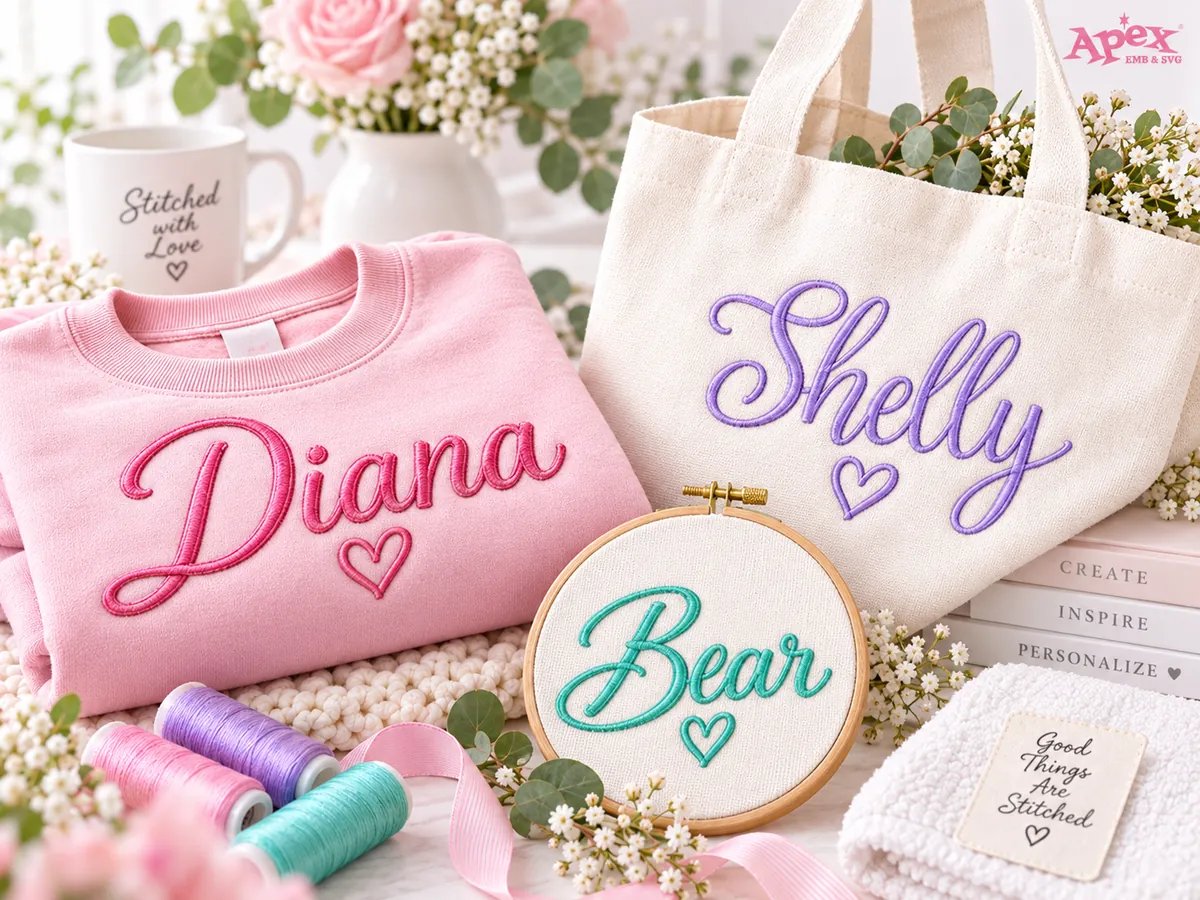
Classic script fonts usually feature smooth, flowing letterforms with an elegant appearance.
They are a great choice for:
- Monograms
- Towels
- Bridal robes
- Wedding gifts
- Baby blankets
- Personalized clothing
- Linens
- Tote bags
- Home décor
Classic script lettering works particularly well when you want the embroidery to feel polished without becoming overly decorative.
For names and initials, choose a font with enough stroke thickness to remain readable after stitching. Very thin calligraphy-style lines may work well on smooth cotton but can become difficult to see on towels, fleece, or other textured fabrics.
You can browse more machine embroidery script fonts to compare different lettering styles before choosing one for your project.
Running Stitch Script Embroidery Fonts
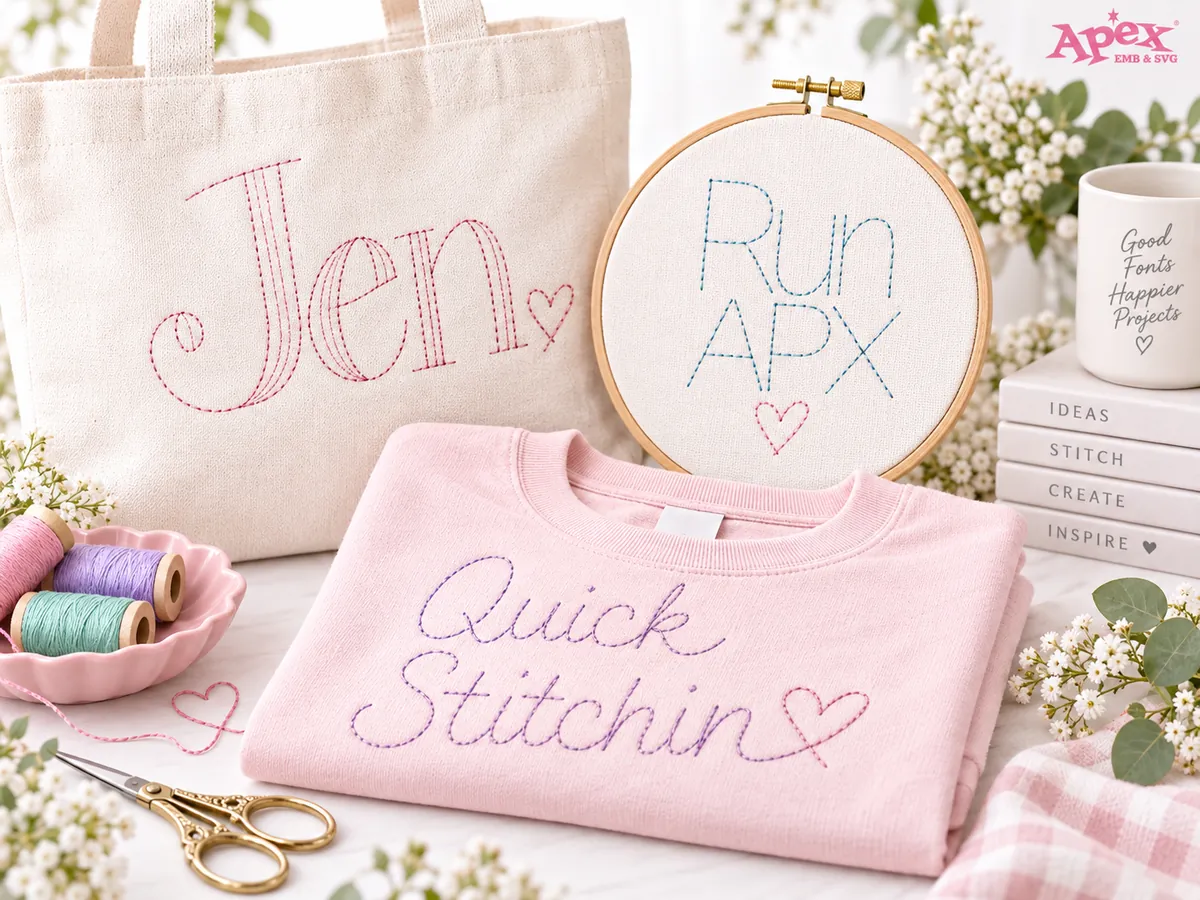
Running stitch fonts create lettering using lighter lines rather than dense satin columns.
This can produce a relaxed, handwritten effect that works beautifully for larger words, decorative phrases, and casual personalized projects.
The main benefits of running stitch lettering include:
- Lighter stitch density
- Faster stitching
- A more natural handwritten appearance
- Less stiffness on lightweight fabric
- Good results for larger flowing designs
If you like this style, the Running Stitch Embroidery Font Bundle is a useful option for adding lightweight lettering to different embroidery projects.
Running stitch scripts can be especially attractive on:
- Shirts
- Tote bags
- Jackets
- Decorative pillows
- Children's clothing
- Lightweight accessories
Because the lines are less dense than satin stitch lettering, stabilizer and thread tension still matter. Always test the design before stitching the final item.
Heart Script Embroidery Fonts
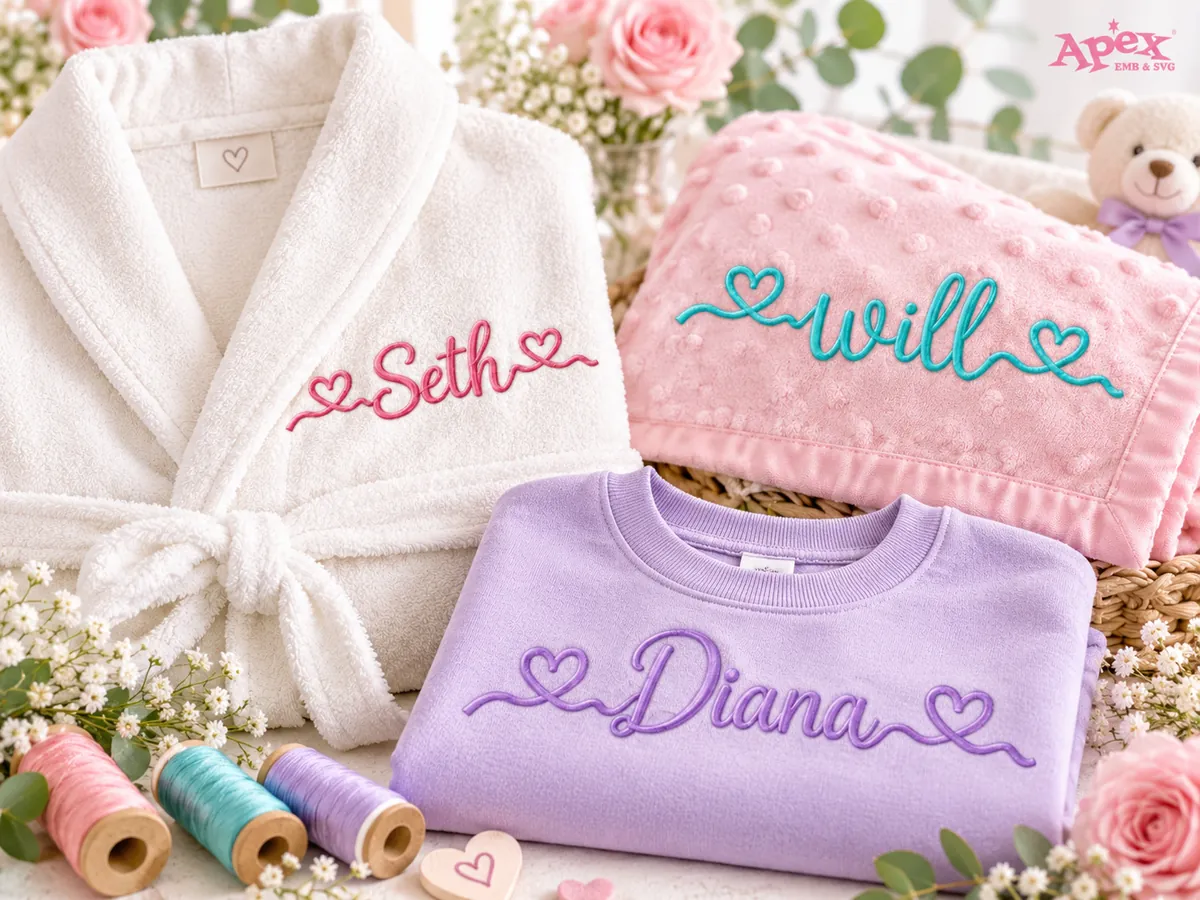
Heart details can make script lettering feel more playful and romantic.
They work particularly well for:
- Valentine's Day projects
- Wedding gifts
- Bridal accessories
- Couple gifts
- Baby items
- Personalized initials
- Anniversary projects
The Candice Heart Script Embroidery Font is a good example of how decorative heart elements can be incorporated into flowing script lettering.
This style works especially well when you want the personalization itself to become part of the decoration rather than simply adding a name underneath a separate design.
For example, try using heart script lettering on:
- A bridal robe
- A personalized makeup bag
- A baby blanket
- A Valentine's sweatshirt
- A monogrammed towel
- A wedding keepsake
3D Puff Script Embroidery Fonts
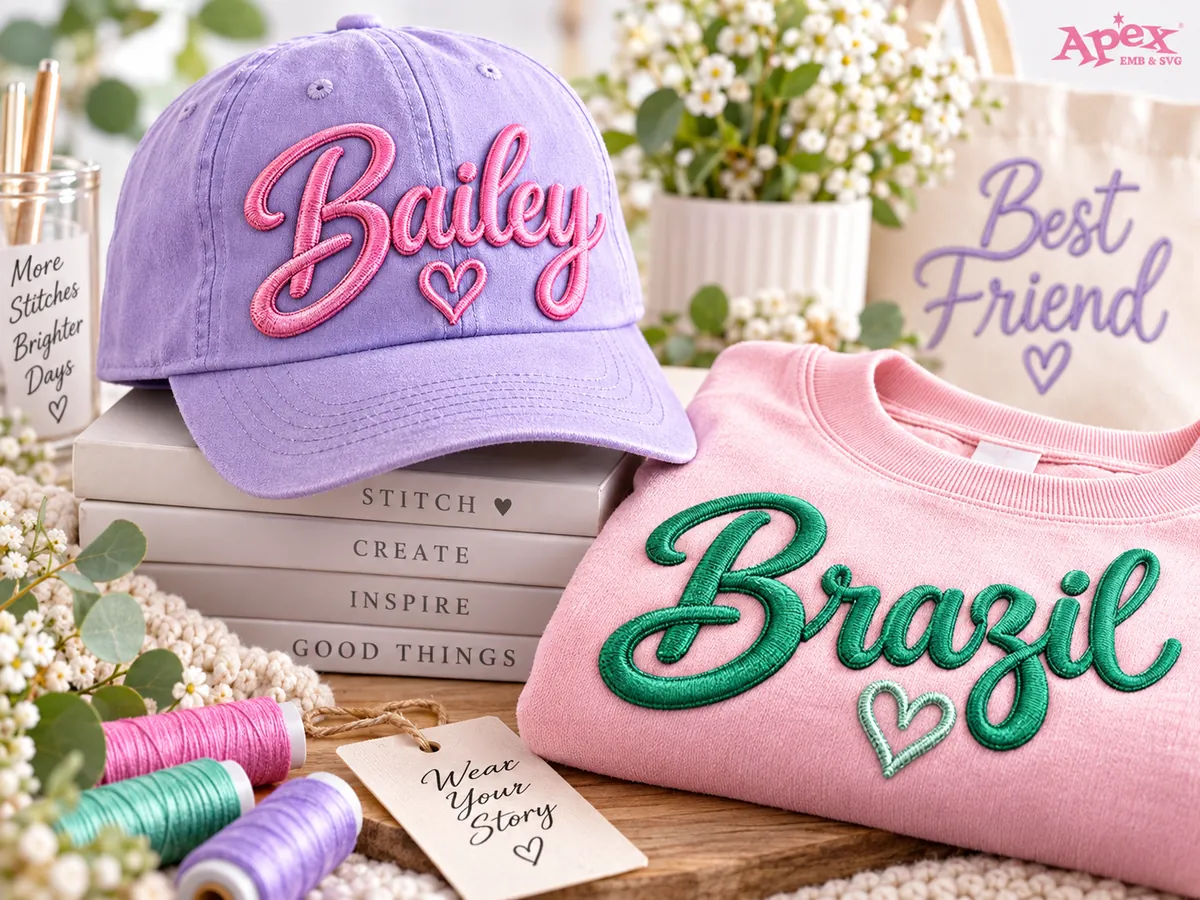
3D puff embroidery is often associated with bold block lettering, particularly on caps. However, specially digitized script fonts can also create raised, dimensional lettering.
With 3D puff embroidery, foam is placed underneath the stitches so the finished lettering stands above the fabric.
The result is particularly effective on:
- Baseball caps
- Sweatshirts
- Jackets
- Streetwear
- Bags
- Bold personalized apparel
The Valentine Script 3D Puff Embroidery Font is designed for projects where you want script lettering with extra dimension.
Because 3D puff requires different digitizing from ordinary flat embroidery, it is important to use fonts created specifically for puff embroidery rather than simply adding foam underneath a standard font.
The lettering should also be large and thick enough to hold the foam effectively.
Multi-Style Script Embroidery Font Bundles
If you regularly embroider names, logos, or personalized items on different fabrics, a multi-style font bundle can be more versatile than purchasing only one stitch style.
For example, the same name might look elegant in regular satin stitch on a towel, textured in chain stitch on a sweatshirt, and bold in 3D puff on a cap.
Several Apex script bundles provide multiple stitch-style versions of the same lettering.
Cassiel Script Embroidery Font
The Cassiel Script Regular, 3D Puff, Bean & Chain Stitch Embroidery Font Bundle gives you multiple ways to use one script style across different projects.
Consider using a regular version for:
- Towels
- Baby gifts
- Names
- Wedding items
Then use a dimensional or textured version when creating caps, jackets, or statement apparel.
Leyton Script Embroidery Font
The Leyton Script Regular, 3D Puff, Bean & Chain Stitch Embroidery Font Bundle is another versatile choice when you want consistent lettering across multiple embroidery techniques.
A single script style can therefore become part of a coordinated collection.
For example, a small embroidery business could use the same font for:
- A personalized sweatshirt
- A matching cap
- A tote bag
- A gift towel
while adjusting the stitch style according to the material.
Chantal Script Embroidery Font
For personalized gifts and decorative lettering, the Chantal Script Regular, 3D Puff, Bean & Chain Stitch Embroidery Font Bundle offers another script option that can be adapted to different project types.
This type of bundle is useful when you want more freedom to experiment without changing the overall lettering style.
Bernard Script Embroidery Font
The Bernard Script Regular, 3D Puff & Chain Stitch Embroidery Font Bundle can be used when you want flowing script lettering with a stronger visual presence.
It is worth testing different stitch versions of the same word before deciding which one works best for your fabric and finished size.
Best Script Embroidery Fonts by Project
The best script font often depends more on the finished item than on the font itself.
Here are several common embroidery projects and what to consider for each one.
Script Embroidery Fonts for Names
Names are one of the most popular uses for script embroidery fonts.
You can embroider names on:
- Sweatshirts
- Shirts
- Baby blankets
- School bags
- Backpacks
- Towels
- Tote bags
- Christmas stockings
- Jackets
- Bridal gifts
For small names, readability should be your priority.
Avoid script fonts with extremely thin strokes or complicated flourishes when working at a small size. The more decorative the lettering becomes, the more space it usually needs.
For larger names across a sweatshirt or tote bag, you have more freedom to choose flowing or decorative lettering.
Fonts such as Cassiel, Leyton, and Chantal can be considered when creating personalized name projects.
Script Embroidery Fonts for Monograms
Script fonts also work beautifully for monograms.
Popular layouts include:
- One large initial
- Two initials
- Three-letter monograms
- Couple initials
- Initials with decorative elements
- Wedding monograms
For one-letter monograms, you can often choose a more decorative uppercase letter because readability is less of a concern.
For three-letter monograms, make sure the letterforms do not overlap excessively.
A decorative design such as the Candice Heart Script Embroidery Font can work particularly well when the monogram is intended to feel romantic or personalized.
Script Embroidery Fonts for Hats
Hats require more careful font selection because embroidery needs to fit within a relatively small area.
When embroidering script lettering on hats:
- Choose readable letterforms.
- Avoid extremely thin strokes.
- Keep decorative swashes under control.
- Test the design at the intended size.
- Make sure the font works with the cap's structure.
3D puff can also be used when the lettering is thick enough.
A script font with a 3D puff option can create an interesting alternative to traditional block lettering, especially for fashion, streetwear, and personalized caps.
Script Embroidery Fonts for Towels
Towels are a classic choice for monogrammed embroidery.
However, towel loops can visually hide very thin stitches.
For towel embroidery:
- Choose a thicker script.
- Use proper stabilization.
- Consider a topping layer.
- Keep letters large enough to remain readable.
- Avoid extremely delicate flourishes.
Names and initials often work better than long phrases.
Elegant script lettering is particularly suitable for:
- Wedding towels
- Guest towels
- Bath towels
- Bridal gifts
- Housewarming gifts
- Personalized spa sets
Script Embroidery Fonts for Sweatshirts
Sweatshirts give you more room to experiment with lettering.
Popular placements include:
- Left chest
- Center chest
- Sleeve
- Upper back
- Small name near the cuff
Regular satin script works well for classic personalization, while bean stitch or chain stitch can add more visible texture.
For larger lettering, 3D puff script can create a bold statement effect.
Script Embroidery Fonts for Tote Bags
Tote bags are excellent practice projects because they usually provide a relatively flat embroidery area.
Try adding:
- A first name
- Initials
- A short phrase
- A bridal title
- A business name
- A gift recipient's name
Running stitch script is especially useful when you want a light, handwritten look without heavy stitch density.
How to Choose the Right Script Embroidery Font
With so many script styles available, it can be tempting to choose based only on appearance.
Instead, consider these five factors.
1. Consider the Finished Letter Size
A font that looks beautiful at four inches wide may not stitch cleanly at one inch.
As letters become smaller:
- Thin strokes can disappear.
- Small loops may close.
- Inner spaces can become crowded.
- Connected letters can become difficult to distinguish.
Always evaluate the font at the actual size you intend to stitch.
If possible, create a sample using the same fabric, stabilizer, needle, and thread before embroidering the final item.
2. Look at Stroke Thickness
Fabric texture has a major impact on lettering.
Smooth cotton can support relatively fine lettering.
Textured materials such as:
- Towels
- Fleece
- Sherpa
- Thick sweatshirts
usually benefit from thicker, clearer strokes.
If the lettering sinks into the material, the problem may not be the font style itself. You may need better stabilization, topping, or a more appropriate stitch structure.
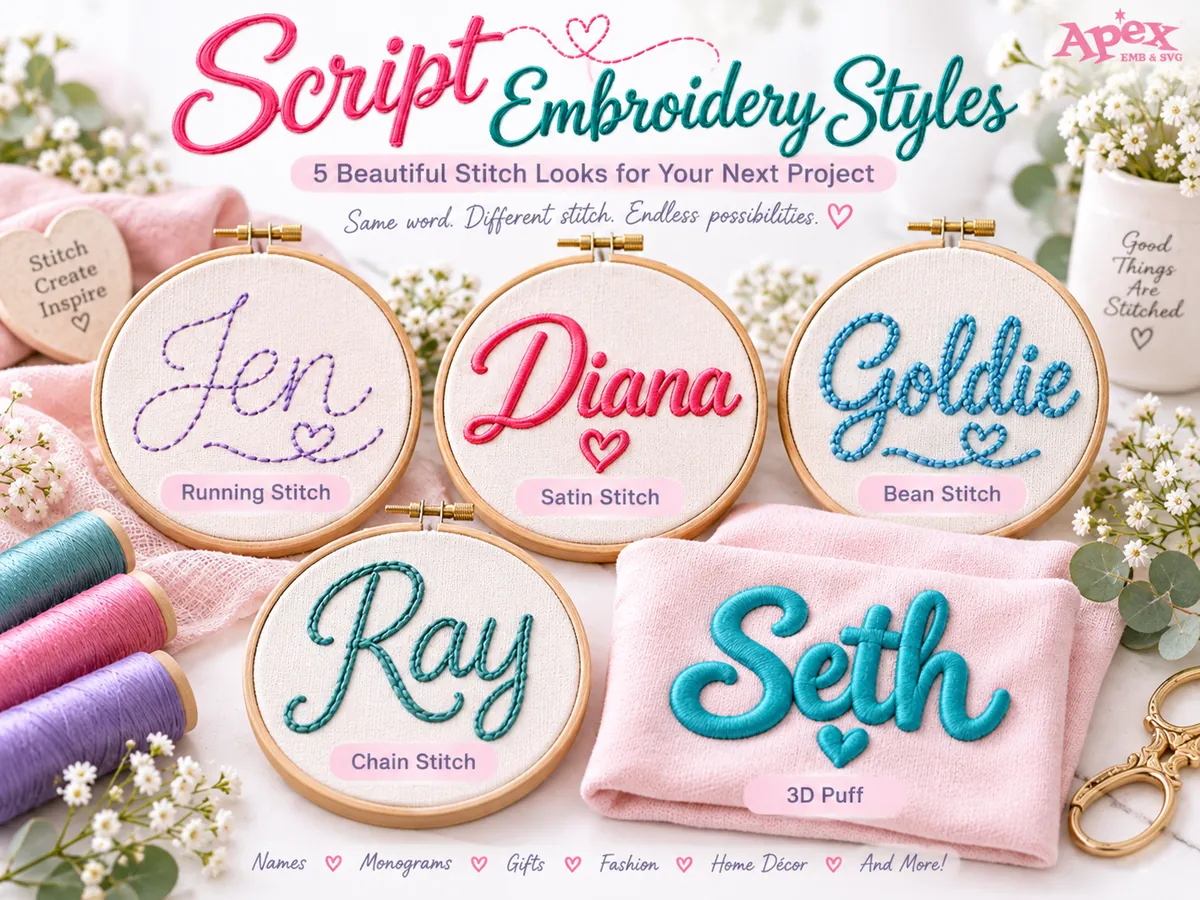
3. Choose the Right Stitch Style
Different stitch types produce different results.
| Stitch Style | Appearance | Good For |
|---|---|---|
| Satin Stitch | Smooth and polished | Names, monograms, gifts |
| Running Stitch | Light and handwritten | Decorative phrases, lightweight projects |
| Bean Stitch | Stronger outlined appearance | Casual lettering and decorative scripts |
| Chain Stitch | Textured and vintage-inspired | Apparel, sweatshirts, fashion projects |
| 3D Puff | Raised and dimensional | Caps, jackets, statement lettering |
If you want flexibility, choosing a font available in multiple stitch styles lets you keep the same lettering aesthetic across several products.
4. Match the Font to the Fabric
Think about where the lettering will be stitched.
Cotton:
Most script styles can work well.
Towels:
Choose slightly thicker lettering and use proper topping.
Sweatshirts:
Satin, bean stitch, chain stitch, and larger script styles all work well.
Caps:
Prioritize readability and stronger strokes.
Linen:
Elegant script fonts can look particularly refined.
Tote bags:
Running stitch, satin, and casual scripts are all good choices.
The same script font may need to be stitched at a different size depending on the fabric.
5. Check Your Embroidery Machine Format
Before purchasing or downloading an embroidery font, make sure it is compatible with your software and machine setup.
Common embroidery file formats include:
- PES
- DST
- JEF
- EXP
- VP3
- XXX
Some embroidery alphabets may also include BX files for use with Embrilliance software.
Always check the product information before starting your project.
Script Embroidery Font Ideas to Try
Not sure what to make?
Here are a few easy ways to use script lettering.
Personalized Sweatshirt
Add a first name or short word across the center chest or left chest.
Try satin stitch for a classic appearance or chain stitch for more texture.
Bridal Robe
Use elegant script lettering for:
- Bride
- Bridesmaid
- Maid of Honor
- Mrs.
- A first name
A heart script can add an extra romantic detail.
Monogrammed Towel
Use one large initial or a three-letter monogram.
Keep the design large enough to stand above the towel texture.
Baby Blanket
Add the baby's first name, initials, or a short phrase.
A soft flowing script can create a more delicate look than block lettering.
Personalized Tote Bag
Use a running stitch script for a lightweight handwritten effect.
Tote bags are also good for practicing longer words or short phrases.
Script Embroidery Hat
Use a bold script or 3D puff style for short names and words.
Keep the lettering simple enough to remain readable from a distance.
How to Get Cleaner Results With Script Embroidery Fonts
Even a beautifully digitized font can stitch poorly if the project is not prepared correctly.
A few simple steps can improve the finished result.
Use the Right Stabilizer
Choose a stabilizer based on your fabric.
Stretchy fabrics generally need more support than woven cotton.
For towels and other textured materials, a water-soluble topping can help prevent stitches from sinking into the surface.
Hoop the Fabric Carefully
Poor hooping can cause:
- Puckering
- Distorted letters
- Uneven baselines
- Misaligned lettering
Keep the fabric secure without stretching it unnaturally.
Test Stitch First
A test stitch lets you check:
- Letter spacing
- Stitch density
- Thread tension
- Readability
- Finished size
This is especially important when using small script lettering.
Avoid Excessive Resizing
Embroidery designs are digitized with a specific stitch structure.
Dramatically increasing or decreasing the size without properly recalculating the stitches can affect the result.
Use the font at a size supported by the design whenever possible.
Pay Attention to Spacing
Script fonts often contain connecting strokes, loops, and decorative details.
When building a name or word, check whether the letters appear naturally spaced.
Too much space can break the flowing script effect, while too little space may cause letters to overlap.
Explore Script Embroidery Fonts at Apex
Script lettering can completely change the character of an embroidery project.
A flowing cursive font can make a simple towel feel like a personalized gift. A running stitch script can give a tote bag a relaxed handwritten look. A dimensional 3D puff font can turn a short word on a cap or sweatshirt into the focal point of the design.
The key is choosing a font that fits both the style of the project and the practical requirements of embroidery.
Consider:
- Finished size
- Fabric texture
- Stroke thickness
- Stitch style
- Letter spacing
- Machine compatibility
Then test your lettering before stitching the final item.
Whether you need elegant monograms, casual handwritten names, decorative heart lettering, running stitch scripts, or dimensional lettering, explore the full collection of script embroidery fonts at Apex Embroidery Designs to find a style that fits your next project.
Frequently Asked Questions About Script Embroidery Fonts
What are script embroidery fonts?
Script embroidery fonts are machine embroidery alphabets designed with flowing, handwritten, cursive, or calligraphy-inspired letterforms. Unlike normal computer fonts, they are digitized specifically for embroidery so the letters can be stitched using an embroidery machine.
What is the difference between script and cursive embroidery fonts?
Script is a broader lettering category that can include cursive, calligraphy, handwritten, signature, and decorative styles. Cursive fonts usually feature connected letters that resemble traditional handwriting.
What script embroidery font is best for names?
The best script font for names depends on the finished size and fabric. For small names, choose clean lettering with thicker strokes and limited flourishes. Larger names can use more decorative script, running stitch, chain stitch, or 3D puff styles.
Can script embroidery fonts be used on hats?
Yes. Script fonts can be embroidered on hats as long as the lettering is large and clear enough for the cap embroidery area. Bold script styles and specially digitized 3D puff fonts can work particularly well.
Can script fonts be used for 3D puff embroidery?
Yes, but you should use a font designed specifically for 3D puff embroidery. Standard embroidery fonts may not have the stitch structure required to cover and secure the foam properly.
What size should script embroidery lettering be?
There is no single ideal size for every script font. Minimum size depends on stroke thickness, letter complexity, stitch type, fabric, and digitizing. Always test the font at the intended finished size before embroidering the final item.
Are running stitch fonts good for script embroidery?
Running stitch fonts can work very well for script lettering because they create a lighter, more handwritten appearance. They are especially useful for decorative names, casual phrases, tote bags, shirts, and larger lettering.
What is a BX embroidery font?
A BX font is an embroidery alphabet format commonly used with Embrilliance software. It allows users to type lettering more like a normal keyboard font instead of manually positioning individual embroidery letter files.