


Hat Embroidery Designs: Creative Ideas for Custom Embroidered Caps

Hats are one of the most versatile accessories for embroidery, offering a practical surface for branding, personalization, and creative expression. A well-executed hat embroidery design can turn a simple cap into a premium fashion accessory, promotional product, team uniform, or personalized gift. Unlike printed graphics, embroidery adds texture, dimension, and a tactile finish that can withstand regular wear.
From structured baseball caps and trucker hats to dad hats, bucket hats, and beanies, different headwear styles create opportunities for a wide range of embroidery applications. Collections such as Apex embroidery design can also provide inspiration when selecting design styles, lettering, and themes for different customer groups.
However, creating professional hat embroidery requires more than choosing attractive artwork. The curved surface, limited embroidery area, fabric construction, stitch density, thread direction, and placement all affect the final result. This guide explains the essential considerations for choosing, digitizing, and producing high-quality hat embroidery designs.
Why Hat Embroidery Design Is So Popular
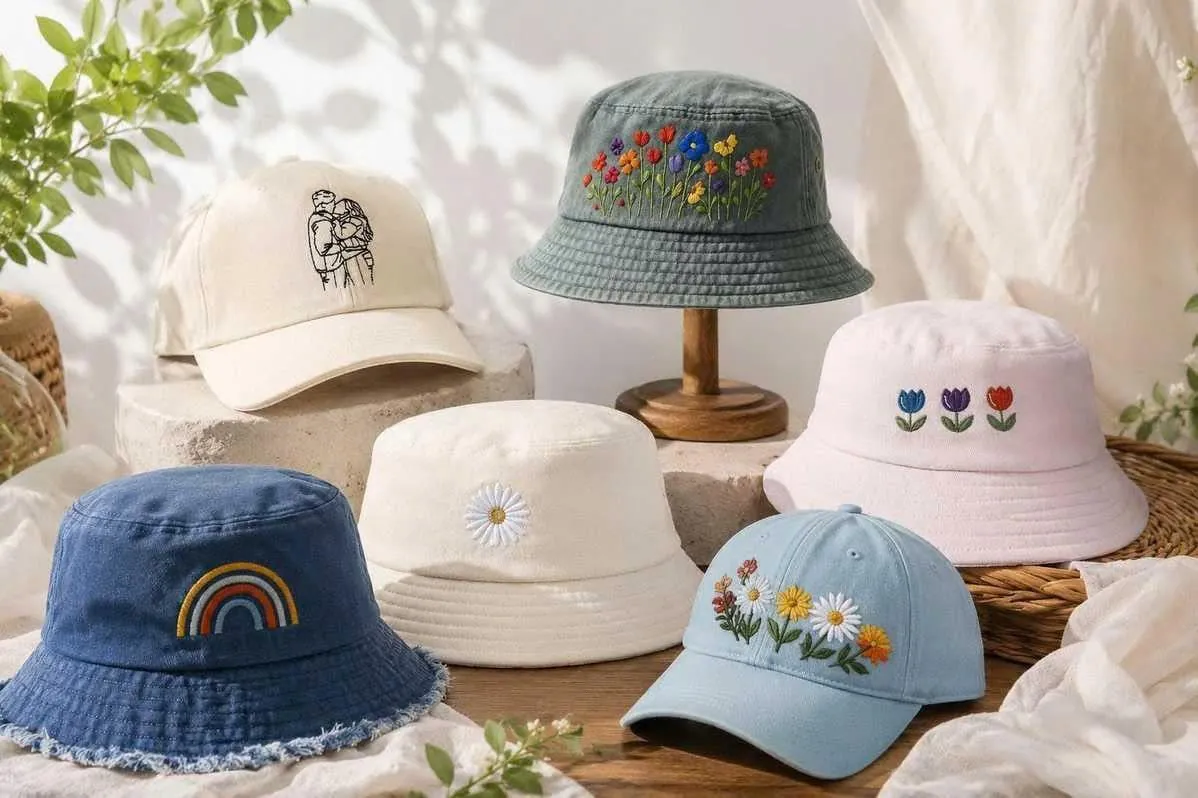
The popularity of embroidered hats comes from a combination of practicality, personalization, and visual appeal. A hat is already a functional everyday accessory, while embroidery gives it an opportunity to communicate identity, interests, or brand recognition.
One of the strongest advantages of embroidery is durability. High-quality embroidery can maintain its appearance through repeated use when the correct thread, stabilizer, digitizing settings, and production techniques are used. This makes embroidered hats particularly suitable for outdoor products, uniforms, sports merchandise, promotional campaigns, and everyday fashion.
Personalization is another major driver. Customers can customize hats with initials, names, logos, symbols, dates, or themed artwork. This makes a hat embroidery design suitable for both commercial products and personal gifts.
Embroidery is also highly adaptable. A minimalist monogram can create an elegant fashion accessory, while a detailed outdoor illustration can appeal to hikers, campers, anglers, or nature enthusiasts. Businesses can use the same basic production process to serve completely different markets.
For embroidery businesses, this versatility makes hats a valuable product category. A carefully planned collection can include evergreen designs, seasonal releases, personalized products, and niche-specific collections without requiring a completely different production workflow for every product.
Popular Types of Hat Embroidery Designs
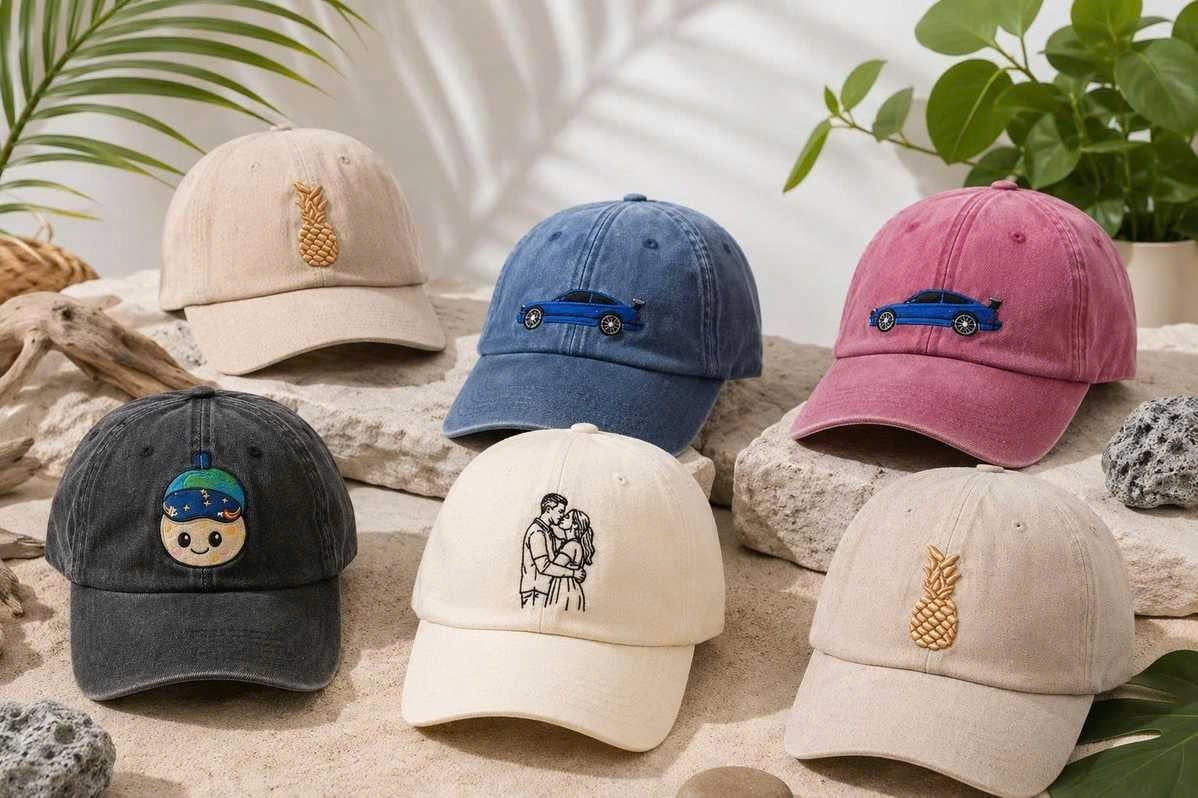
Choosing the right design category is important because different customers look for different visual styles. A strong embroidery collection should combine timeless designs with niche and seasonal concepts.
Logo Hat Embroidery Designs
Logo embroidery is one of the most common applications for hats. Companies use embroidered caps for employee uniforms, promotional merchandise, trade shows, sponsorships, and corporate events.
A professional logo design should prioritize recognition and clarity. Complex details that work well on a digital screen may not translate effectively into thread, particularly when the design is small. Simplifying unnecessary details while preserving the brand's defining shapes can produce a cleaner result.
Monogram and Personalized Designs
Monogram embroidery remains popular because it combines personalization with a classic appearance. Initials can be stitched in serif, sans-serif, script, or decorative lettering styles depending on the intended aesthetic.
Personalized hats are particularly suitable for birthdays, graduations, weddings, anniversaries, family gifts, and boutique merchandise. Names, meaningful dates, initials, and short phrases can transform a standard hat into a more distinctive product.
Nature and Outdoor Designs
Nature-inspired designs are highly compatible with hats because they naturally support lifestyle branding. Mountains, forests, pine trees, wildlife, fishing scenes, lakes, flowers, and camping illustrations are commonly used for outdoor-oriented collections.
These designs can range from simple line art to more detailed compositions. For hats, however, strong silhouettes and controlled details generally produce better embroidery than artwork containing excessive small elements.
Floral Hat Embroidery Designs
Floral designs remain a versatile option for fashion and personalized products. Roses, daisies, lavender, wildflowers, leaves, and botanical motifs can create either a delicate or contemporary appearance.
Floral artwork works particularly well when stitch direction is planned to follow the natural structure of petals and leaves. This helps create visual movement while giving the embroidery greater dimension.
Animal and Sports Designs
Animal embroidery appeals to pet owners and wildlife enthusiasts, while sports designs are frequently used by teams, clubs, and recreational communities.
Dogs, cats, horses, bears, deer, birds, butterflies, and other animals can be adapted into realistic, illustrative, or minimalist embroidery. Sports-related designs may include team logos, mascots, equipment, numbers, or activity-specific symbols.
Seasonal Designs
Seasonal hat embroidery designs are useful for keeping a product catalog fresh throughout the year. Christmas, Halloween, Valentine's Day, and other holidays provide opportunities for limited collections.
For example, Christmas designs can incorporate snowflakes, ornaments, reindeer, and festive motifs, while Halloween collections may focus on pumpkins, ghosts, bats, or skeleton-inspired artwork. Seasonal collections can complement evergreen designs rather than replacing them.
Choosing the Right Hat for Embroidery
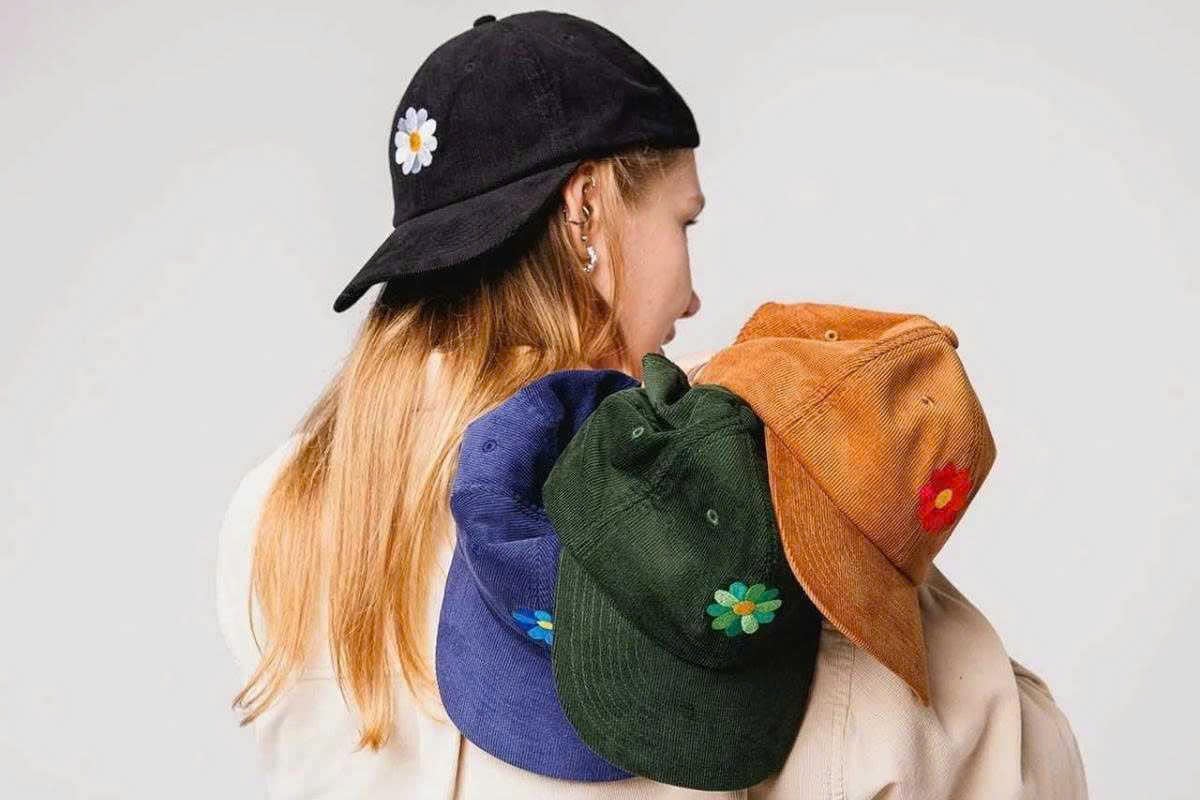
The hat itself has a direct effect on embroidery quality. Different materials and constructions require different approaches to stabilization, hooping, sizing, and stitch placement.
Structured Baseball Caps
Structured caps have reinforced front panels that provide a stable embroidery area. They are particularly suitable for logos, lettering, monograms, and medium-sized artwork.
Because the front panel is relatively firm, these caps are often easier to control during production than softer hat styles.
Trucker Hats
Trucker hats combine a solid front panel with a mesh back, making the front an effective area for embroidery. Their association with outdoor, lifestyle, sports, and workwear markets makes them particularly suitable for logos, vintage badges, and nature-inspired designs.
Dad Hats
Dad hats have a softer, relaxed construction and create a casual aesthetic. They can accommodate many embroidery styles, but their less structured panels may require more careful stabilization and design selection.
Simple lettering, small icons, minimalist artwork, and personalized designs tend to work particularly well.
Bucket Hats and Beanies
Bucket hats provide interesting placement opportunities because embroidery can extend beyond a traditional centered front design. Side panels, repeated motifs, and wraparound concepts can create a more artistic result.
Beanies offer another opportunity, especially for winter collections. Their knit construction produces a different embroidered texture and requires appropriate settings to prevent distortion.
Key Elements of a Professional Hat Embroidery Design
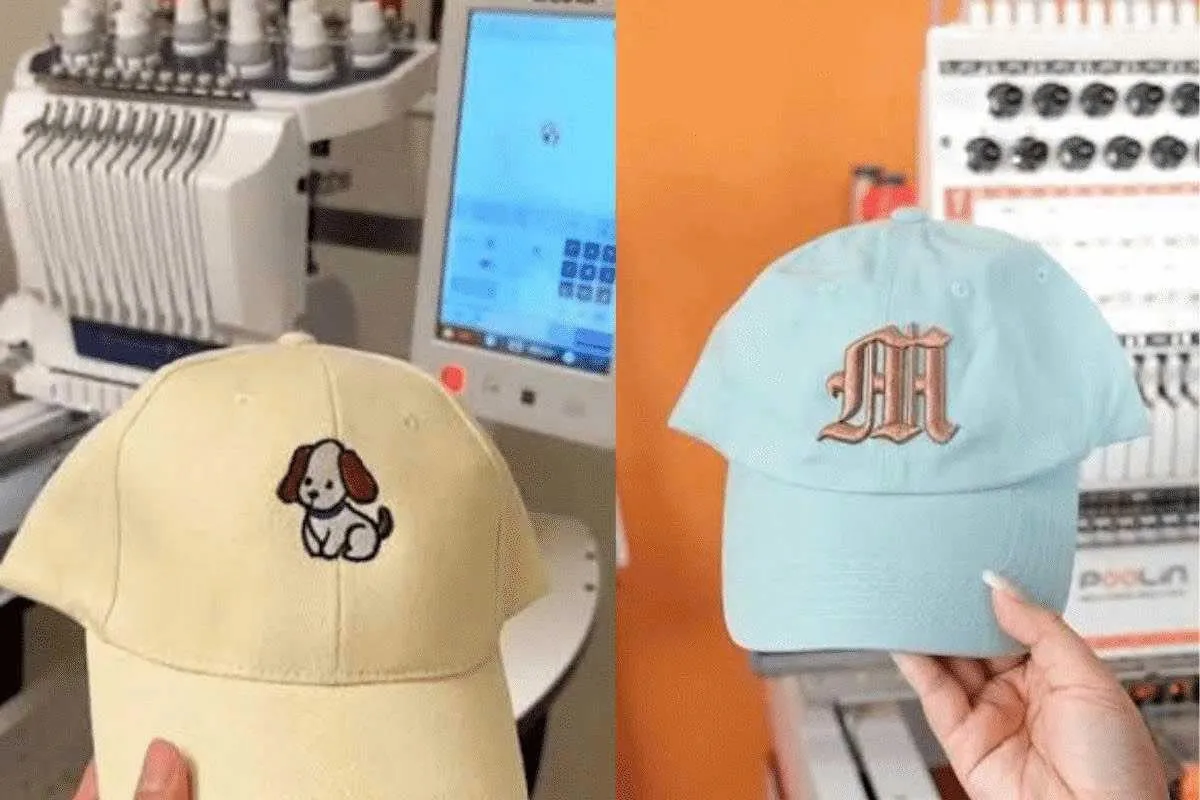
A successful hat embroidery design must be visually attractive and technically suitable for production. Several factors should be considered before sending a design to the embroidery machine.
Professional Digitizing
Digitizing converts artwork into machine-readable stitch instructions. For hats, digitizing should account for the curved embroidery surface rather than simply reusing a design created for a flat garment.
Important considerations include:
- Stitch direction
- Underlay
- Stitch density
- Pull compensation
- Stitch sequencing
- Object overlap
- Design size
- Curvature of the hat panel
Poor digitizing can result in distorted shapes, gaps, thread breaks, puckering, or uneven lettering. Professional digitizing instead aims to control how stitches interact with the fabric and with one another.
Stitch Direction and Underlay
Stitch direction influences both the appearance and stability of embroidery. Changing stitch angles between adjacent elements can help distinguish shapes and create visual dimension.
Underlay provides a foundation for the top stitches. On hats, appropriate underlay is especially important because the curved surface can cause movement during stitching. The exact settings should be adjusted according to the fabric, design, and embroidery machine.
Stitch Density and Pull Compensation
Excessive stitch density can make a hat stiff and may increase the risk of thread breaks or fabric distortion. Insufficient density, on the other hand, can leave unwanted gaps and reduce visual coverage.
Pull compensation is equally important because stitches can pull fabric inward as they are formed. Proper compensation helps preserve the intended dimensions of the design after stitching.
The goal is not to maximize the number of stitches but to use the minimum amount necessary to achieve a clean and durable result.
How to Choose the Right Embroidery Font
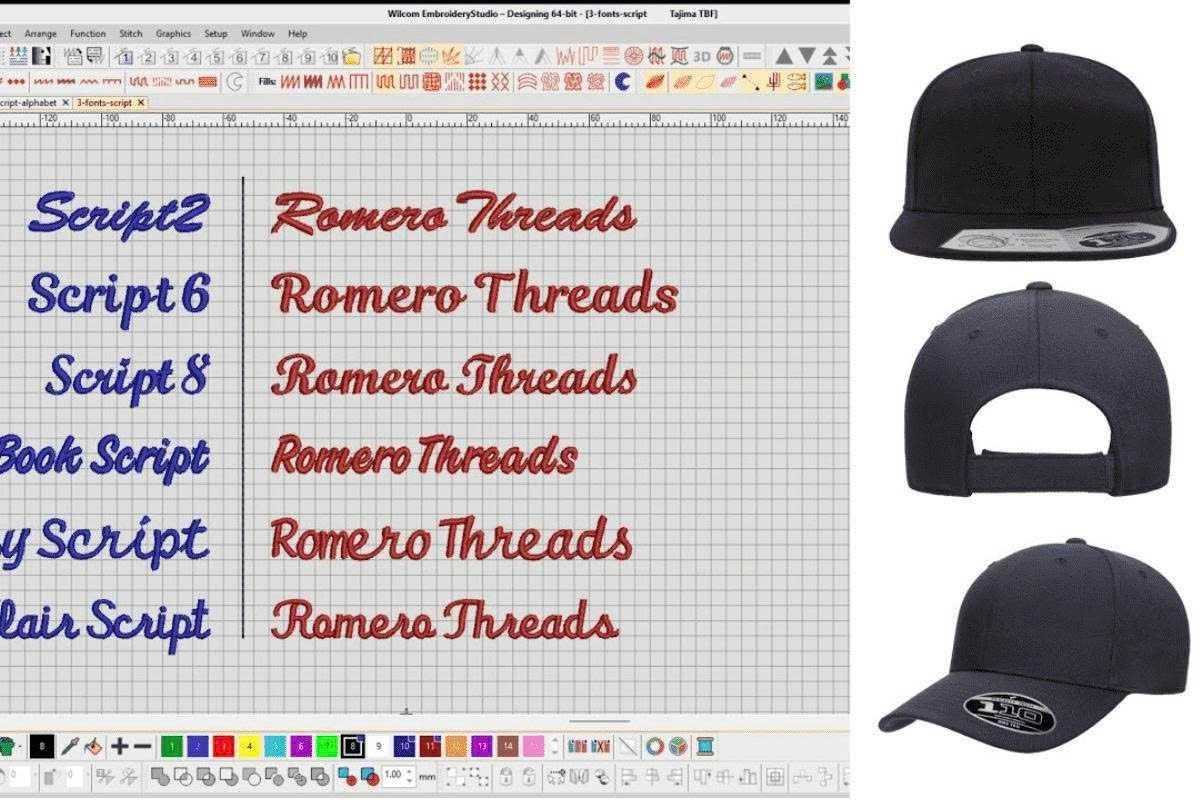
Typography requires special attention when creating a hat embroidery design. Lettering that looks perfect on a computer screen may become difficult to read once converted into stitches.
Choosing the right embroidery font begins with evaluating letter thickness, spacing, height, and overall complexity.
Bold Sans-Serif Fonts
Bold sans-serif fonts are among the safest choices for hat embroidery. Their simple structures are easy to digitize and remain readable at relatively small sizes.
They are especially effective for company names, sports teams, uniforms, promotional products, and modern lifestyle brands.
Serif Fonts
Serif fonts provide a traditional and refined appearance. They can work well for monograms, heritage brands, universities, premium products, and formal gifts.
However, very thin serifs should be avoided when the lettering is small because narrow details may not reproduce clearly in thread.
Script Fonts
Script lettering creates a more decorative and personalized appearance. It can be suitable for names, boutique products, weddings, and fashion-oriented designs.
The main concern is complexity. Excessive flourishes and thin strokes can reduce readability. A slightly heavier script style generally provides a more reliable embroidered result.
Block Lettering
Block lettering is particularly effective when visibility is the priority. Outdoor brands, sports organizations, construction businesses, and promotional products often benefit from bold block-style typography.
Regardless of font category, the lettering should always be evaluated at its actual embroidery size rather than only at the artwork stage.
Best Placement for Hat Embroidery
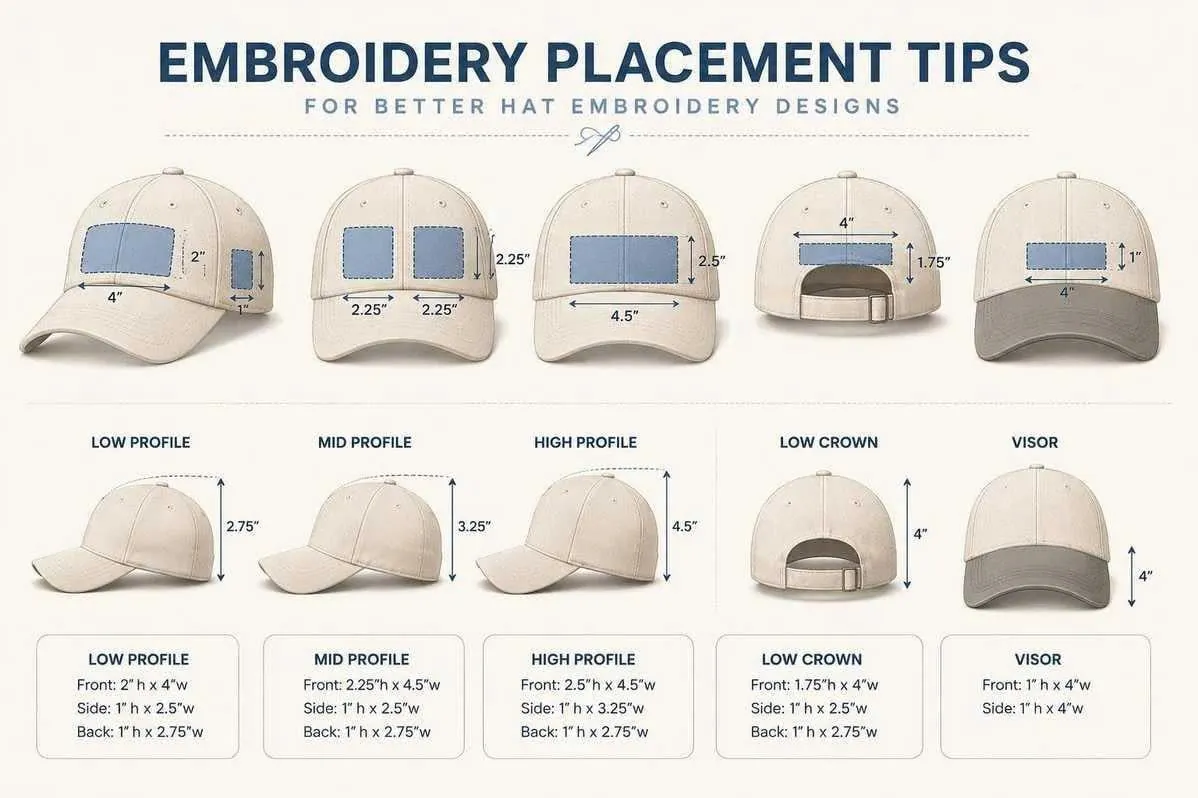
Placement determines how visible and balanced the finished design appears.
Center Front
The center front panel is the most recognizable embroidery location. It is ideal for logos, monograms, mascots, symbols, and primary artwork.
Because this area receives the most attention, the strongest visual element should normally be positioned here.
Side Placement
Side embroidery is useful for smaller secondary details. Initials, flags, dates, small symbols, or additional branding can be positioned on the side without competing with the primary front design.
Combining front and side embroidery can create a more premium, layered appearance.
Back Placement
The back of a hat provides another customization area. Short phrases, names, dates, website-related information, or secondary branding elements can be used here.
The key is to keep the back design concise so it complements rather than overwhelms the primary embroidery.
Common Mistakes to Avoid
Several production mistakes can reduce the quality of a hat embroidery design.
Using excessive detail: Tiny illustrations and very small lettering may disappear when stitched. Simplify artwork whenever necessary.
Ignoring stitch density: Too many stitches can cause stiffness, puckering, and unnecessary machine stress.
Choosing weak color contrast: Thread colors that closely match the hat may reduce visibility unless a subtle tone-on-tone appearance is intentional.
Using unsuitable fonts: Thin or highly complicated lettering can become difficult to read.
Skipping test stitch-outs: A design may behave differently depending on the hat material, stabilizer, thread, and machine. Testing allows adjustments before full production.
Hat Embroidery Design Trends for 2026
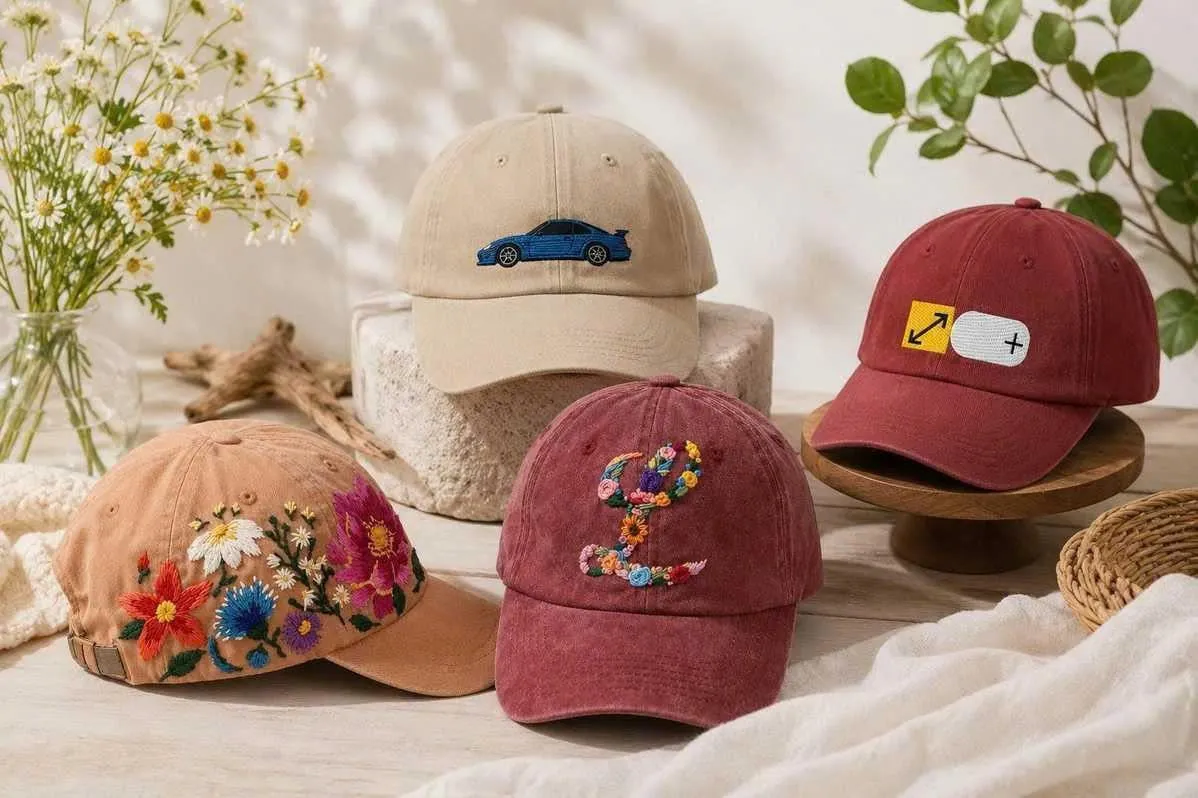
Current design directions increasingly emphasize personalization, simplicity, and lifestyle-oriented artwork. Minimalist icons, nature themes, vintage-inspired graphics, custom names, monograms, and niche-specific designs remain strong options for embroidery collections.
Vintage badges and retro typography work particularly well on trucker hats and structured caps, while minimalist botanical motifs and small initials suit contemporary fashion products.
Personalization is also increasingly important. Customers are not only looking for attractive designs; they want products that communicate something specific about themselves, their interests, businesses, teams, or communities.
For embroidery businesses, this creates an opportunity to combine evergreen designs with customizable elements. A single base design can potentially support multiple names, initials, colors, or variations while maintaining a consistent collection style.
Best Embroidery File Formats for Hats
Embroidery machines require stitch files rather than standard image formats such as JPG or PNG. Common embroidery formats include PES, DST, EXP, JEF, VP3, and HUS, although compatibility depends on the machine.
For example, PES is commonly associated with Brother and Baby Lock machines, while JEF is used with compatible Janome machines. DST is widely supported across many commercial embroidery systems.
Providing multiple formats can make a collection more accessible to customers using different machines. However, simply converting an image into another file extension does not create a usable embroidery file. Artwork must first be professionally digitized into actual stitch instructions.
How to Maintain High-Quality Embroidered Hats
Quality control should continue after stitching is complete. Each finished hat should be inspected for loose threads, uneven stitches, distortion, incorrect positioning, and color inconsistencies.
Proper care also helps preserve embroidery. Gentle washing, avoiding harsh bleach, and appropriate drying methods can help maintain thread color and stitch appearance.
For embroidery businesses, maintaining consistent quality is just as important as creating attractive designs. A reliable production process helps reduce rework, improve customer satisfaction, and establish a stronger brand reputation.
Frequently Asked Questions About Hat Embroidery Design
What is a hat embroidery design?
A hat embroidery design is artwork that has been specifically digitized into embroidery stitches for application on hats, caps, beanies, bucket hats, trucker hats, and other types of headwear. Unlike standard digital artwork, an embroidery design contains information such as stitch types, stitch direction, density, sequencing, and other settings required by an embroidery machine.
What is the best hat for embroidery?
Structured baseball caps and trucker hats are among the most suitable options because their front panels provide a relatively stable surface for embroidery. Dad hats, bucket hats, visors, and beanies can also be embroidered, but their different fabric structures may require specialized stabilization, sizing, and digitizing techniques.
How do I choose the right size for a hat embroidery design?
The appropriate size depends on the hat style, available embroidery area, design complexity, and intended placement. Center-front designs generally need to fit comfortably within the front panel without extending into curved seams. Small designs are often more effective for side or back placement, while larger artwork may be suitable for bucket hats with broader embroidery areas.
What type of design works best for hat embroidery?
Designs with bold shapes, clean outlines, balanced spacing, and recognizable details generally produce the most reliable results. Logos, monograms, minimalist artwork, vintage badges, nature motifs, animal designs, sports graphics, and personalized lettering are all well suited to hat embroidery.
Highly detailed artwork can also be embroidered, but it may need to be simplified during digitizing. Very small details, thin lines, and tiny lettering can become difficult to reproduce clearly with thread.
Which embroidery font is best for hats?
Bold sans-serif and block fonts are reliable choices because their thicker letterforms remain readable after stitching. Serif fonts can provide a more traditional appearance, while moderately weighted script fonts work well for names and personalized hats.
The best embroidery font ultimately depends on the design size and purpose. Font weight, spacing, letter height, and stitch density should all be considered before production.