


Embroidery Flowers: 15+ Flower Embroidery Designs & Project Ideas

Flowers have always been a favorite subject in embroidery. They can be delicate and romantic, bright and playful, elegant and traditional, or simple enough to add just a small decorative detail to a project.
With machine embroidery, creating beautiful embroidery flowers is even easier because you can choose from professionally digitized designs in different sizes, styles, and levels of detail. A tiny flower can decorate a shirt collar, while a colorful floral arrangement can completely transform a tote bag, towel, sweatshirt, pillow, or wedding gift.
If you are looking for inspiration, explore the Flowers and Nature Embroidery Designs collection from Apex Embroidery Designs for machine-ready floral patterns in many different styles.
What Are Embroidery Flowers?
Embroidery flowers are floral motifs created using decorative stitching. In machine embroidery, the artwork is converted into a digitized file that tells the embroidery machine exactly where and how to place each stitch.
Depending on the design, embroidered flowers may use filled areas, outlines, satin stitches, sketch-style stitching, layered colors, or combinations of these techniques.
This makes floral machine embroidery incredibly versatile.
| Flower embroidery style | Look | Great for |
|---|---|---|
| Filled flowers | Bold, colorful and detailed | Shirts, bags, towels, décor |
| Sketch and outline flowers | Light and modern | Apparel, linen and accessories |
| Tiny floral accents | Delicate and subtle | Collars, pockets and monograms |
| Watercolor flowers | Soft and painterly | Weddings, gifts and home décor |
| Decorative flowers | Elegant and ornamental | Towels, linens and pillows |
| Flowers with words | Decorative and meaningful | Gifts, shirts and inspirational projects |
There is no single "best" type of flower embroidery. The right design depends on what you are stitching and how you want the finished project to feel.
Beautiful Embroidery Flower Designs to Try
One reason flowers work so well in machine embroidery is the variety. You are not limited to traditional roses or daisies. Floral embroidery can be cute, modern, romantic, minimal, ornamental, seasonal, or even combined with typography.
Here are several flower embroidery styles to inspire your next project.
1. Cute and Playful Flower Embroidery
Not every flower has to look realistic.
Playful floral designs are perfect for casual clothing, children's projects, summer accessories, tote bags, sweatshirts, and cheerful gifts.
The Happy Smiling Flower embroidery design from Apex is a good example. It combines a simple flower shape with a happy face for a fun, youthful look.
The design comes in three digitized sizes:
- 1.81" x 3.01"
- 2.41" x 4.02"
- 3.01" x 5.02"
The smaller version could work nicely as an accent on a child's shirt or bag, while the larger size can become the main feature on a sweatshirt, tote, or other larger project.
This type of design also shows why choosing the right embroidery size matters. A motif that looks perfect on a large sweatshirt may overwhelm a small pocket or sleeve.
2. Flower Embroidery With Inspirational Words
Florals pair naturally with quotes and lettering because the flowers soften the composition and help frame the text.
They work especially well for inspirational gifts, Bible covers, tote bags, shirts, wall décor, tea towels, and keepsake projects.
For example, the Grow in Grace Flowers embroidery design combines the phrase "Grow in Grace," inspired by 2 Peter 3:18, with blooming flowers.
It is available in three sizes, from approximately 3 inches to 5 inches wide.
This type of design is useful when you want the embroidered message to remain the main focus while the flowers provide decorative detail around it.
When using embroidery designs that combine words and flowers, pay attention to both size and readability. Very small lettering may not stitch as clearly on highly textured fabrics.
3. Watercolor Flower Embroidery
If traditional filled embroidery feels too solid for your project, watercolor-style flowers can create a softer effect.
Watercolor embroidery designs use color and stitch placement to imitate the layered, slightly irregular appearance of painted flowers. The result feels more artistic and organic than a perfectly symmetrical floral motif.
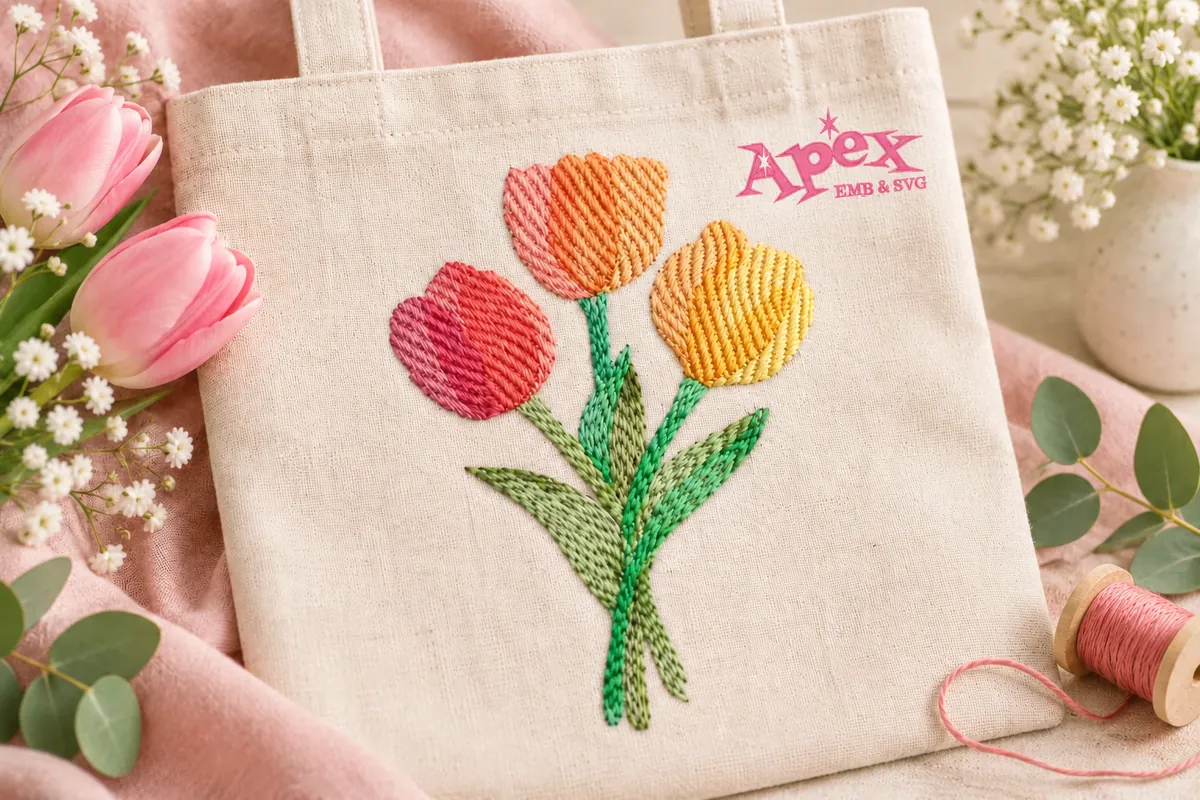
The Watercolor Flowers Embroidery Designs Bundle from Apex includes nine floral designs, including:
- Blooming tulips
- Classic tulips
- Watercolor tulips
- Daffodils
- Wedding peonies
- Lilies
- Watercolor flax flowers
- Flax flowers
- A watercolor four-leaf clover
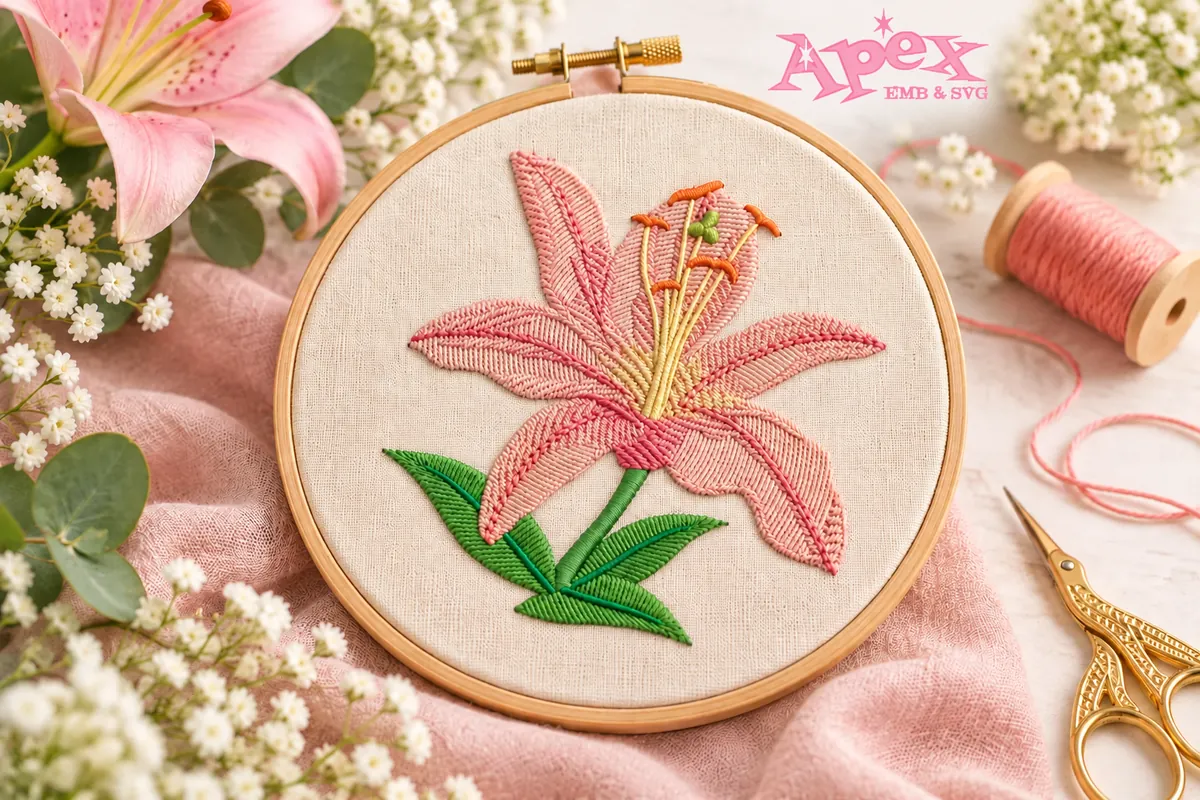
This range makes watercolor flowers especially useful for spring and summer projects.
Try them on:
- Linen towels
- Table runners
- Throw pillows
- Tote bags
- Bridal gifts
- Wedding linens
- Cosmetic bags
- Garden-themed gifts
Watercolor floral embroidery can also work beautifully when you want the design to look decorative without feeling too heavy.
4. Classic Daffodil Embroidery
Few flowers say spring quite like daffodils.
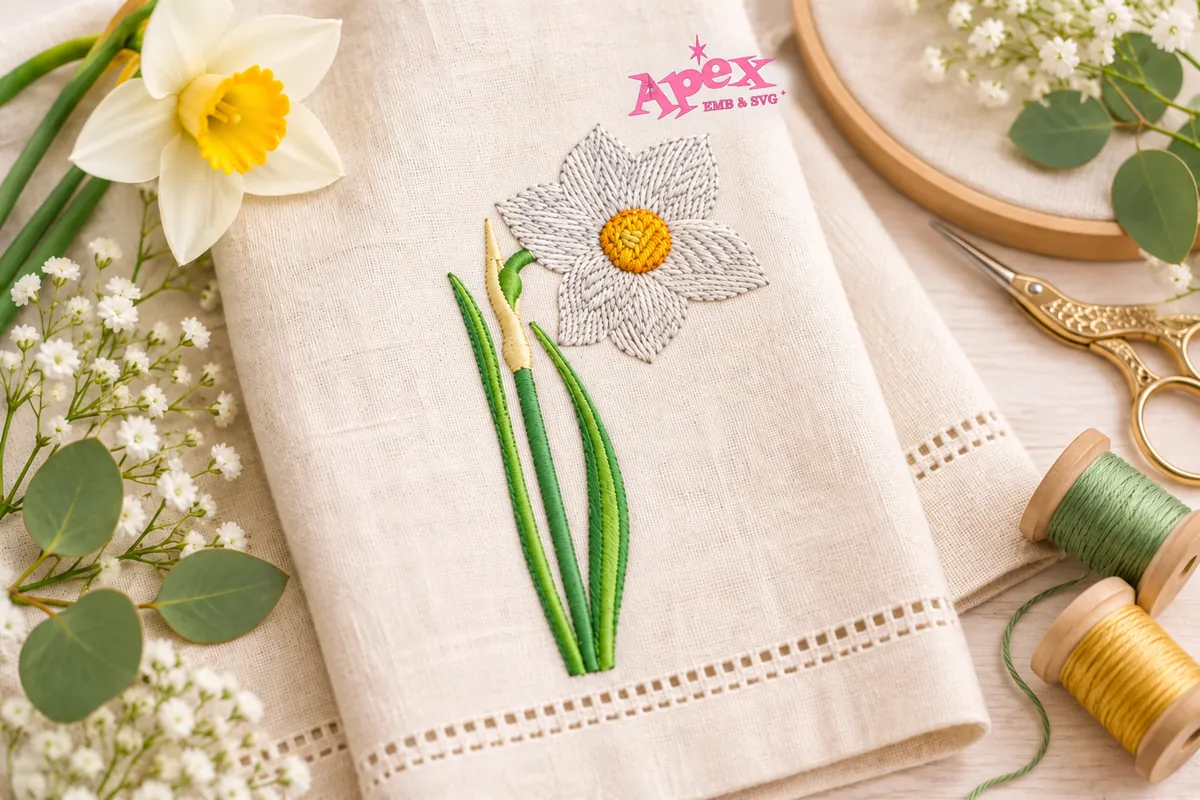
Their recognizable trumpet-shaped blooms make them a natural choice for spring décor, Easter projects, Mother's Day gifts, garden-themed embroidery, tea towels, and seasonal accessories.
The Daffodils flower embroidery design from Apex is offered in three sizes:
- 2.88" x 3.01"
- 3.83" x 4.00"
- 4.78" x 5.02"
This gives you flexibility when using the same floral style across different projects.
A smaller daffodil may work well on a towel or tote pocket, while a larger version can become the focal point of a pillow or shirt.
You can also experiment with thread colors. Traditional yellow creates the familiar spring look, while softer creams, whites, pastels, or stylized colors can help the design coordinate with a specific project.
5. Elegant Damask Flower Embroidery
Floral embroidery does not always need to imitate flowers exactly as they appear in nature.
Damask and ornamental flowers use symmetry and decorative shapes to create a more formal appearance.
The Damask Flower embroidery design from Apex is a good example of this style.
Unlike a naturalistic rose or daffodil, a damask flower can feel more architectural and decorative. This makes it especially suitable for projects such as:
- Guest towels
- Pillowcases
- Table linens
- Napkins
- Monogrammed gifts
- Decorative home accessories
The Apex design is available in two sizes, approximately 2.5 and 3.5 inches tall, which makes it practical as an accent rather than an oversized centerpiece.
Damask florals are also useful when combining flowers with monograms because their symmetry can create an elegant frame around initials.
6. Rose Embroidery Designs
Roses are among the most recognizable and versatile flowers in embroidery.
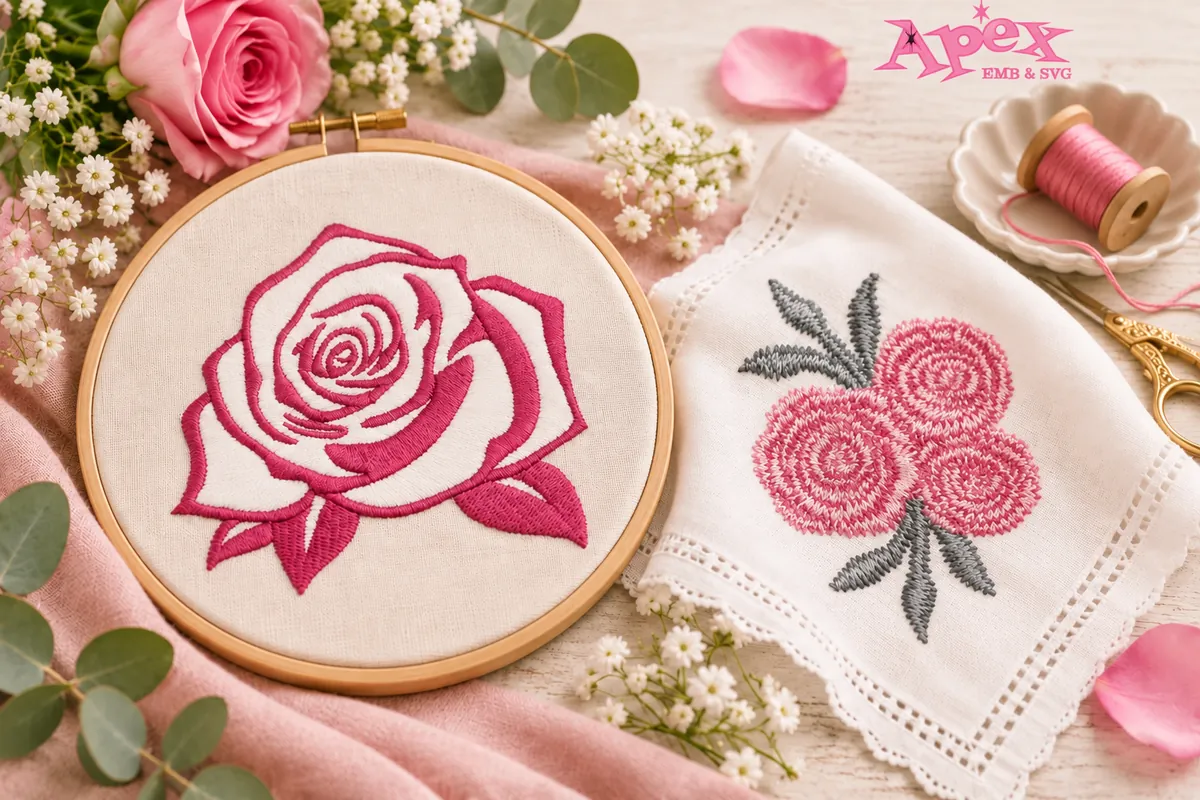
They can feel romantic, vintage, elegant, modern, dramatic, or minimal depending on how they are digitized.
A realistic filled rose works very differently from a simple rose outline, which is why having several styles can be useful.
The Rose Embroidery Designs Bundle from Apex includes 12 rose designs ranging from tiny accents to larger bouquets.
The collection includes styles such as:
- Rose silhouettes
- Sketch-style roses
- Filled rose designs
- Rose patches
- Thorned stems
- Rose bouquets
- Miniature roses
- Rosebud accents
That variety makes rose embroidery suitable for many different projects.
For weddings, try a delicate rose on bridal linens, handkerchiefs, gift bags, or keepsakes.
For Valentine's Day, a classic red rose can decorate sweatshirts, towels, pillows, or fabric gift bags.
For everyday projects, try a line-art rose on a denim jacket, tote bag, cosmetic pouch, or shirt.
Small rose accents can also work beautifully around monograms without competing with the initials.
7. Tiny Flower Embroidery Designs
Sometimes a small design can have more impact than a large centerpiece.
Small flower embroidery designs are ideal when you want to add a subtle detail rather than cover a large area of fabric.
Think about placements such as:
- Shirt collars
- Sleeve cuffs
- Chest pockets
- Napkin corners
- Baby clothes
- Handkerchiefs
- Monograms
- Small zipper pouches
- Fabric labels
The Tiny Decorative Flower #3 embroidery design from Apex is available in sizes starting at just 0.90" x 1.02".
A flower this small can sit neatly beside a monogram, inside a corner, or along the edge of a garment.
Tiny florals are also useful for repeating patterns. Instead of stitching one large flower, you can place several smaller blooms around a neckline, pocket, or border.
How to Choose the Right Flower Embroidery Design
A beautiful design on your computer screen does not automatically mean it is the right design for every project.
Before stitching, consider the following factors.
Design Size
Always compare the design dimensions with your project's available embroidery area and your machine's hoop size.
A flower that looks beautiful at five inches wide might be far too large for a hand towel or pocket.
Whenever possible, use the digitized sizes supplied with the original embroidery file instead of drastically resizing the design yourself.
Fabric Type
Different fabrics behave differently under embroidery.
Stable cotton can handle many types of floral designs, while stretchy garments, delicate linen, towels, denim, and other fabrics may require different stabilizer and hooping techniques.
Dense, highly detailed flowers usually need more fabric support than simple outline embroidery.
Stitch Density
A filled floral design may have thousands more stitches than a light sketch design of a similar size.
Higher stitch density can create beautiful coverage, but it also places more stress on the fabric.
If you are working with lightweight material, consider a lighter flower design or make sure you are using appropriate stabilization.
Floral Style
Think about the overall mood of your finished project.
For example:
Watercolor flowers create a soft and artistic look.
Rose silhouettes feel modern and minimal.
Damask flowers feel elegant and traditional.
Tiny flowers create subtle decorative accents.
Smiling or cartoon flowers are playful and casual.
Choosing by style can be more useful than choosing only by flower species.
Number of Thread Colors
A multicolor flower may create beautiful depth, but it can also require more thread changes.
If you are making several products at once, a simpler design with fewer colors may be easier for batch production.
On the other hand, a detailed wedding gift or decorative pillow may be worth the extra color changes.
Project Purpose
Ask yourself where the finished item will be used.
A decorative pillow gives you plenty of space for a detailed floral arrangement. A shirt collar requires something much smaller. A wedding gift might call for elegant roses or peonies, while a child's tote may suit a bright smiling flower.
The design should complement the project rather than simply fit inside the hoop.
Apex Tip: Before stitching the final project, run a test stitch on a similar fabric using the same stabilizer and thread combination. A test helps you check size, color, density, placement, and overall stitch quality before using your final item.
Best Projects for Flower Embroidery Designs
One of the biggest advantages of floral embroidery is that flowers work on almost everything.
Here are some of the best ways to use machine embroidery flowers.
T-Shirts and Sweatshirts
Place a small flower on the left chest for a subtle look, or use a larger bloom in the center of the sweatshirt.
Tiny flowers can also be arranged around a neckline or sleeve.
Tote Bags
Totes give you a large, flat embroidery area, making them ideal for watercolor florals, roses, flower sayings, or larger arrangements.
Towels
Flowers are a classic choice for kitchen towels, hand towels, and guest towels.
Decorative damask flowers work especially well for elegant bathrooms, while spring flowers can brighten kitchen linens.
Pillows and Cushions
A pillow provides enough space to use detailed flowers as the main design.
Consider a floral bouquet, rose arrangement, large watercolor flower, or a combination of flowers and lettering.
Denim Jackets
Outline roses, sketch florals, and botanical designs work beautifully on denim.
Small flowers can decorate pockets and collars, while larger designs can be placed on the back panel.
Baby and Children's Clothing
For baby bodysuits and children's apparel, look for small, cheerful designs that suit the available embroidery area.
Cute florals and tiny decorative flowers are good options.
Wedding Projects
Floral machine embroidery is especially suitable for weddings.
Try roses, lilies, peonies, and watercolor flowers on:
- Bridal handkerchiefs
- Getting-ready shirts
- Wedding towels
- Keepsake bags
- Table linens
- Ring pillows
- Bridal shower gifts
Adding initials or a wedding date can make the piece even more personal.
Monogrammed Gifts
Small flowers can frame or decorate a monogram without overpowering the letters.
Try positioning tiny blooms above, below, beside, or around the initials.
Small vs. Large Embroidery Flowers
Size has a big effect on both appearance and project suitability.
Here is a simple starting point:
| Approximate design size | Good project ideas |
|---|---|
| Under 2" | Collars, cuffs, pockets, napkins and monograms |
| 2" to 4" | Shirts, towels, zipper bags and small totes |
| 4" to 6" | Sweatshirts, pillows, totes and larger décor |
| 6"+ | Jackets, quilts, blankets and statement pieces |
These are general guidelines rather than strict rules. Always check the exact design dimensions and make sure they fit within your embroidery machine's supported hoop or embroidery field.
You should also consider stitch density. A lightweight six-inch sketch flower may behave very differently from a six-inch densely filled floral design.
How to Make Machine Embroidery Flowers Look Better
Choosing a beautiful design is only the first step. Setup has a major effect on how your finished embroidery looks.
Use the Right Stabilizer
Choose stabilizer based on your fabric and design density.
A dense rose on a lightweight shirt needs more support than a simple outline flower on stable cotton.
Hoop Carefully
Keep your fabric smooth and stable, but avoid stretching it unnaturally while hooping.
Stretching knit fabric before stitching can lead to distortion when the fabric relaxes after being removed from the hoop.
Think About Thread Color
You do not always have to use the colors shown in the original design preview.
One of the easiest ways to personalize flower embroidery is to change thread colors to match your garment, home décor, wedding palette, or personal style.
A rose does not have to be red. A daffodil does not always need to be yellow.
Check Placement Before Stitching
Mark the center and orientation of your design carefully.
For clothing, consider how the flower will look when the garment is actually being worn rather than only when it is lying flat.
Test Before the Final Stitch-Out
A test piece helps reveal issues such as puckering, poor color combinations, insufficient stabilization, or a design that feels too large for the intended placement.
This is especially helpful when trying a new design or unfamiliar fabric.
Avoid Excessive Resizing
Machine embroidery files are digitized with specific stitch lengths, densities, and underlay settings.
Significantly enlarging or shrinking a design without proper embroidery software can affect the final result.
When multiple professionally digitized sizes are available, choose the one that most closely fits your project.
Why Flowers Remain a Machine Embroidery Favorite
Floral designs rarely feel limited to one season or occasion.
Roses work for weddings and Valentine's Day. Daffodils are perfect for spring. Tiny flowers can be used year-round. Watercolor florals suit everything from bridal gifts to home décor.
Flowers are also easy to personalize through color.
One embroidery file can produce completely different results depending on whether you choose soft pastels, natural botanical shades, bright rainbow thread, neutrals, or monochrome stitching.
That flexibility makes flower embroidery designs useful for both hobby embroiderers and small businesses creating personalized products.
Find More Flower Embroidery Designs at Apex
Whether you prefer tiny floral accents, classic roses, playful flowers, decorative damask motifs, or soft watercolor blooms, there are countless ways to bring flowers into your embroidery projects.
Apex Embroidery Designs offers a large selection of downloadable flower embroidery designs created for machine embroidery.
Many Apex designs are provided in multiple digitized sizes and common machine embroidery formats, including PES, DST, ART, EXP, JEF, HUS, SEW, VIP, VP3, and XXX.
Instead of limiting yourself to one floral style, experiment with different sizes, colors, placements, and flower types. A tiny bloom beside a monogram can be just as beautiful as a large floral arrangement across a tote bag or pillow.
The best embroidery flowers are ultimately the ones that fit both your machine and the story you want your finished project to tell.
Frequently Asked Questions About Embroidery Flowers
What are the best flowers for embroidery?
Roses, daisies, tulips, daffodils, peonies, lilies, and small decorative flowers are all popular choices for machine embroidery. The best flower depends on the project. Roses and peonies work beautifully for romantic projects, while daisies and playful flowers are better for casual designs.
What can I embroider flowers on?
Flower embroidery designs can be used on T-shirts, sweatshirts, tote bags, towels, pillows, denim jackets, table linens, napkins, baby clothing, zipper pouches, wedding gifts, and many other fabric projects.
Are flower embroidery designs good for beginners?
Yes. Beginners may find simple floral designs with fewer colors and lower stitch counts easier to start with. Small outline flowers and uncomplicated filled designs can be good first projects. Always test the design before stitching your final item.
What size flower embroidery design should I use?
The ideal size depends on your placement. Flowers under two inches work well for collars, cuffs, pockets, and monograms. Designs between two and four inches suit many shirts and towels, while larger flowers work better on sweatshirts, tote bags, pillows, and statement pieces.
Can I resize machine embroidery flower designs?
Minor adjustments may be possible depending on the embroidery software and file, but significant resizing can change stitch density, stitch length, and overall quality. When a design includes multiple professionally digitized sizes, it is usually better to select the closest available size.
What embroidery file format do I need?
The correct file format depends on your embroidery machine. Common machine embroidery formats include PES, DST, JEF, EXP, HUS, VIP, VP3, ART, SEW, and XXX. Check your machine manual to confirm which format it supports.
Where can I download machine embroidery flower designs?
You can browse the Flowers and Nature Embroidery Designs collection at Apex Embroidery Designs for downloadable machine embroidery flowers, floral bundles, decorative flowers, roses, seasonal botanicals, and other nature-inspired designs.
What are good small flower embroidery designs for clothing?
Tiny decorative flowers, rosebuds, small line-art flowers, and miniature filled blooms work well for clothing. They can be placed on shirt pockets, collars, sleeve cuffs, children's garments, or beside embroidered names and monograms.